
PVC pipes for underground drainage have become the go-to solution for modern infrastructure projects. From residential sewage systems to large-scale stormwater networks, these pipes offer durability, ease of installation, and long-term reliability. Whether you're planning a small drainage setup or managing a commercial project, understanding how PVC drainage systems work can save time, cost, and future repairs.
This guide breaks down everything you need to know from pipe types and sizes to installation best practices and supplier selection.
What Are PVC Pipes for Underground Drainage?
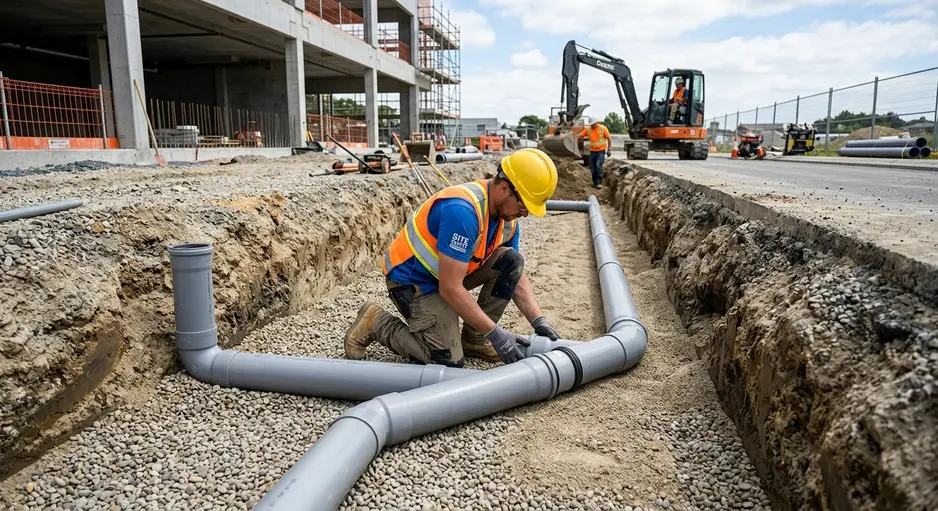
Overview of UPVC underground drainage pipes
UPVC underground drainage pipes are unplasticized polyvinyl chloride pipes designed for non-pressure applications like sewage and stormwater flow. They are rigid, corrosion-resistant, and widely used in subsurface drainage systems due to their strength and longevity.
Difference between pressure and non-pressure UPVC pipes
UPVC pipes are categorized based on usage:
- Pressure pipes – Used for water supply systems
- Non-pressure pipes – Used in drainage and sewer systems
Underground drainage typically uses non-pressure pipes, which are optimized for gravity flow rather than internal pressure.
Why PVC is widely used in subsurface drainage systems
PVC stands out among underground sewer piping materials due to its resistance to chemicals, smooth internal surface, and lightweight nature. These features reduce blockages and simplify installation.
Common applications
- Sewer lines in residential and urban areas
- Stormwater drainage networks
- Industrial wastewater systems
- Commercial drainage piping solutions
Types of PVC Pipes Used in Underground Drainage Systems
Standard PVC sewer pipe for underground use
These are rigid pipes commonly used in household and municipal drainage systems. They are designed for gravity-based flow and offer strong resistance to soil pressure.
Corrugated PVC pipes for underground drainage
Corrugated PVC pipes feature a ribbed exterior and smooth interior. This design improves flexibility while maintaining flow efficiency, making them suitable for uneven terrains.
Heavy duty PVC pipes for underground sewer lines
SN class pipe load ratings define how much external load a pipe can handle. Common ratings include SN2, SN4, and SN8. Higher SN values indicate stronger pipes suitable for deeper burial or heavy traffic areas.
stormwater drainage PVC vs HDPE pipes
Both materials are widely used, but PVC often provides better stiffness and structural integrity. HDPE offers flexibility, while PVC ensures consistent shape under load. Choosing between them depends on soil conditions and project needs.
Choosing between rigid and flexible drainage piping materials
Rigid PVC pipes are ideal for stable soil conditions, while flexible options like corrugated pipes work better in shifting or uneven ground.
PVC Drainage Pipe Sizes and Specifications
Common PVC drainage pipe sizes and dimensions
PVC drainage pipe sizes and specifications vary depending on application. Common diameters include:
- 75 mm to 110 mm for residential drainage
- 160 mm to 315 mm for commercial systems
- Above 400 mm for municipal networks
Understanding SN class pipe load ratings
SN ratings help engineers select the right pipe strength. For example:
- SN2: Light-duty applications
- SN4: Medium-duty installations
- SN8: Heavy-duty and deep burial systems
IS standards for PVC pipes in India
In India, PVC pipes must comply with standards like IS 4985 and IS 15328. These ensure quality, durability, and safety for underground use.
PVC drainage flow capacity charts and design considerations
Flow capacity depends on pipe diameter, slope, and roughness coefficient. PVC’s smooth interior allows efficient flow, reducing the risk of clogging.
Design and Installation Best Practices
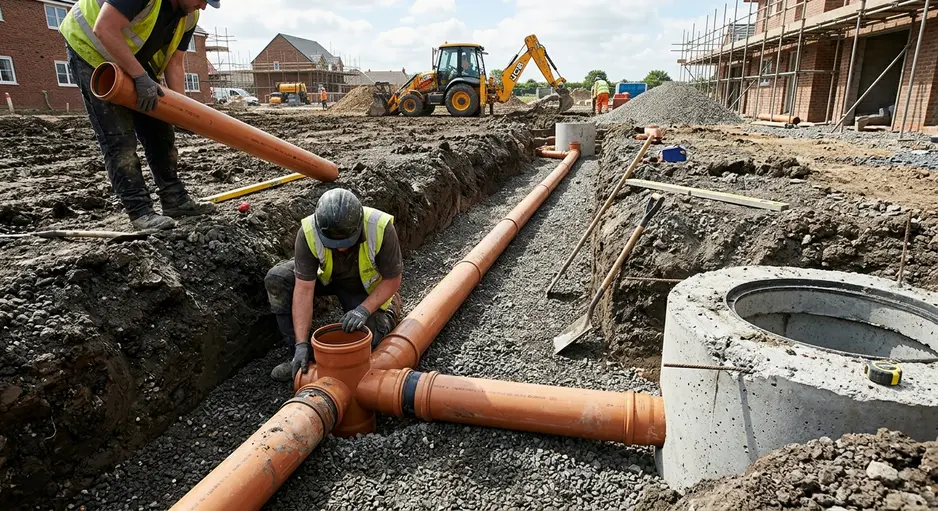
PVC underground drainage design standards and planning tips
Proper planning ensures long-term performance. Key considerations include slope, soil type, and expected load conditions.
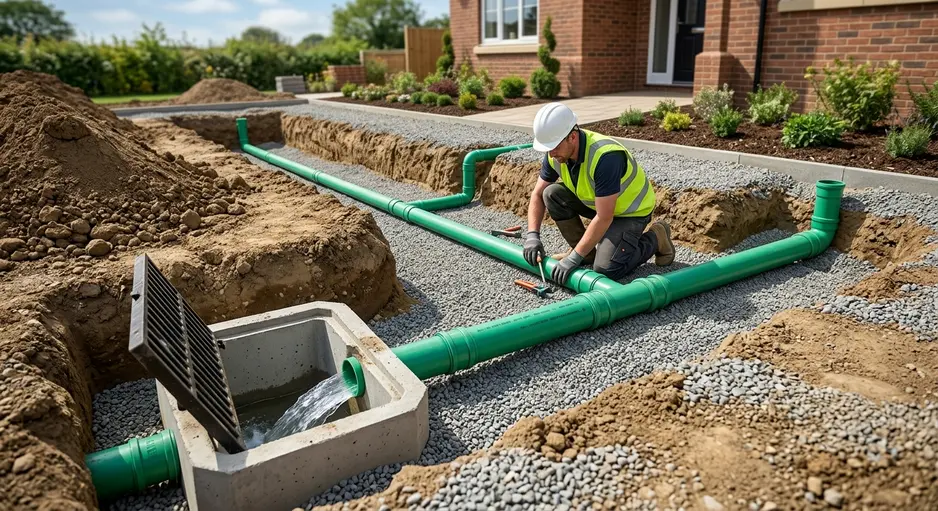
Trench installation for PVC drains
Trench installation for PVC drains should maintain proper alignment and slope.
Pipe bedding and backfill guidelines
Correct bedding supports the pipe and prevents damage. Use sand or fine gravel as bedding material, and compact backfill layers evenly.
PVC pipe jointing using solvent cement vs rubber ring joints
- Solvent cement joints – Permanent and leak-proof
- Rubber ring joints – Flexible and easy to assemble
Trenchless PVC pipes for underground drainage
Trenchless methods are used in urban areas where excavation is difficult. These systems reduce disruption and installation time.
Benefits of Using PVC Pipes for Underground Drainage
Corrosion resistant drainage pipes vs metal alternatives
PVC does not rust or corrode, making it ideal for long-term underground use.
PVC pipe lifespan underground
With proper installation, PVC pipes can last 50 years or more, offering excellent value over time.
Cost-effectiveness and ease of installation
Lightweight design reduces labor costs, while easy jointing speeds up installation.
Leak-proof performance and environmental advantages
PVC pipes minimize leakage, protecting soil and groundwater from contamination.
How to Choose the Best PVC Pipes
Key factors to consider
- Load capacity and SN rating
- Soil conditions and depth
- Flow requirements
Selecting the best PVC pipes for stormwater drainage projects
Choose pipes with higher SN ratings for areas with heavy traffic or deep burial.
Matching pipe type with sewage drainage design calculations
Accurate calculations help determine pipe diameter and slope, ensuring smooth flow without overflow.
Common mistakes to avoid
- Using incorrect pipe size
- Ignoring soil conditions
- Poor jointing practices
PVC Drainage Fittings and Accessories for Underground Installations
Types of PVC drainage fittings
- Bends and elbows
- Tees and junctions
- Couplers and reducers
- Traps and inspection chambers
Importance of proper fittings
Correct fittings ensure leak-proof connections and smooth flow direction.
Compatibility with different pipe classes and sizes
Always match fittings with pipe specifications to avoid installation issues.
Installation tips
Ensure clean joints, proper alignment, and secure connections to enhance durability.
PVC Pipe Manufacturers, Suppliers, and Exporters
Choosing reliable PVC underground drainage pipe manufacturers in India
Look for manufacturers that follow IS standards and offer consistent product quality.
PVC drainage pipe suppliers in India
Reliable suppliers provide a wide range of sizes, fittings, and technical support.
PVC drainage pipe Exporter in India
PVC drainage pipe exporter requires proper documentation, including quality certifications and shipping compliance.
Buy the Right PVC Pipes for Drainage
Conclusion
PVC pipes for underground drainage offer a reliable and cost-effective solution for modern infrastructure. With the right selection, proper installation, and adherence to standards, these systems can perform efficiently for decades. Whether you are a contractor, engineer, or buyer, understanding the technical aspects and supplier landscape helps you make informed decisions that ensure long-term success.
Choosing a reliable supplier like Scotto Pipes can further enhance the performance, longevity, and overall value of your underground drainage projects.
FAQs
1. Can PVC pipes handle heavy loads in underground sewer lines?
Yes, heavy duty PVC pipes with higher SN ratings are designed for such conditions.
2. What is the difference between UPVC and regular PVC pipes?
UPVC is rigid and ideal for drainage, while regular PVC may include plasticizers and is more flexible.
3. How do you join PVC pipes for underground installations?
Use solvent cement or rubber ring joints depending on the application.
4. Are PVC pipes environmentally safe for drainage systems?
Yes, they are non-toxic and prevent leakage, protecting surrounding soil and water.
5. What is the lifespan of PVC pipes underground?
Most PVC pipes last over 50 years when installed correctly and maintained well.
6. What size PVC pipe is used for underground drainage?
Common sizes range from 75 mm to 315 mm, depending on application and flow requirements.
7. How deep should PVC drainage pipes be buried?
Depth depends on load conditions, but typically ranges from 0.5 to 3 meters.
8. What is SN rating in PVC pipes?
SN rating indicates the pipe’s stiffness and ability to withstand external loads.