
Choosing the right pvc pipe and fittings is essential for building a reliable plumbing system. The correct size, length, and placement ensure smooth water flow and long-term durability. Whether you are installing a new system or upgrading an old one, selecting suitable pvc plumbing fittings makes a big difference.
In this guide, we will explain how to choose the right pipe diameter, understand standard lengths, and place piping correctly for residential and commercial plumbing.
What Are PVC Pipe and Fittings?
Understanding PVC Pipe for Plumbing
PVC (Polyvinyl Chloride) is a strong, lightweight material widely used in water supply and drainage systems. A good pvc pipe for plumbing offers:
-
Corrosion resistance
-
Smooth inner surface for better flow
-
Easy installation
-
Long service life
Rigid pvc pipe is commonly used in plumbing because it maintains structural strength under pressure.
What Are PVC Plumbing Fittings?
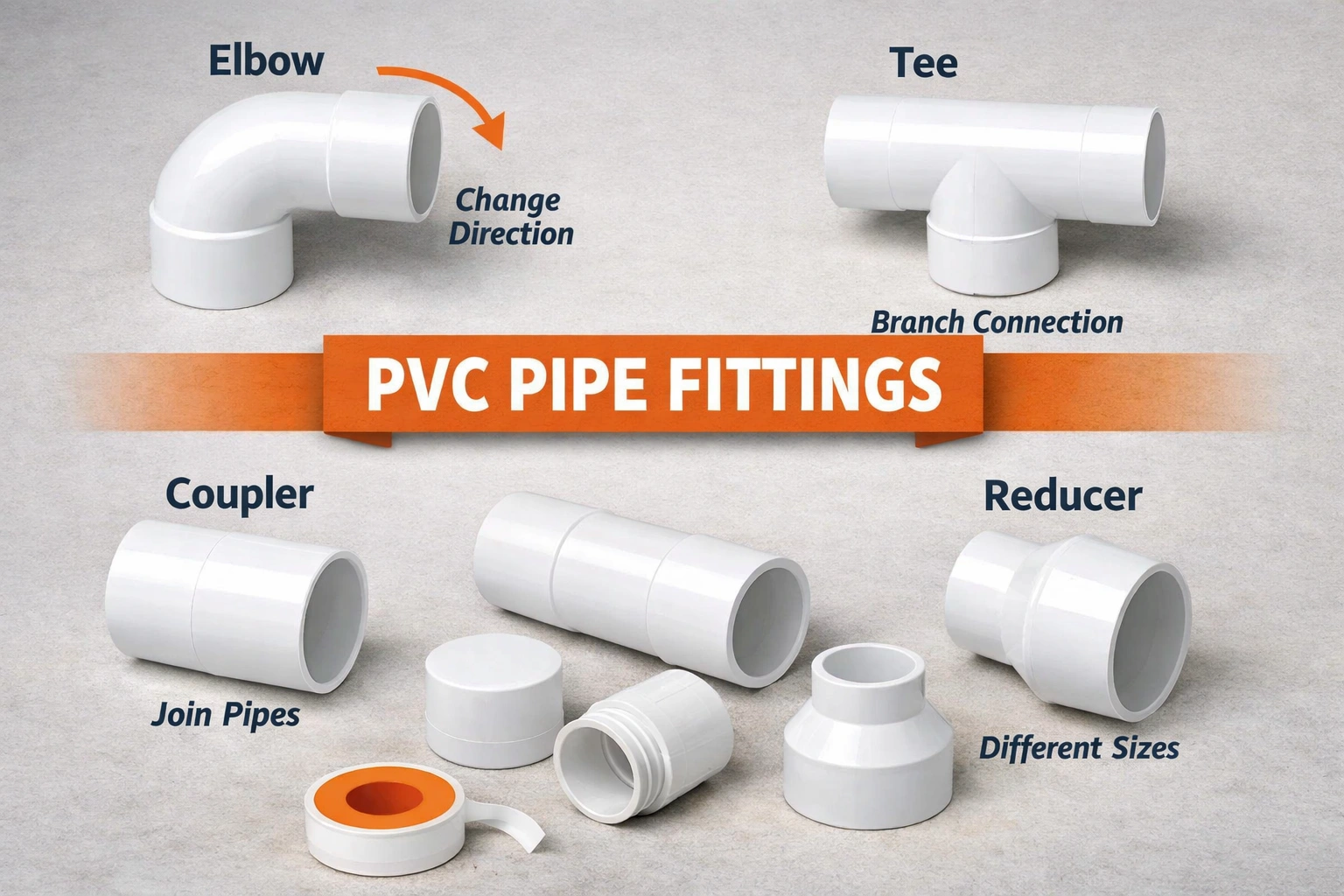
Fittings connect pipes and control direction or flow. Common types of plumbing pvc pipe fittings include:
-
Elbows (change direction)
-
Tees (branch connection)
-
Couplers (join pipes)
-
Reducers (connect different diameters)
Proper pvc plumbing fittings ensure leak-proof and secure connections.
Standard PVC Pipe Sizes for Plumbing Systems
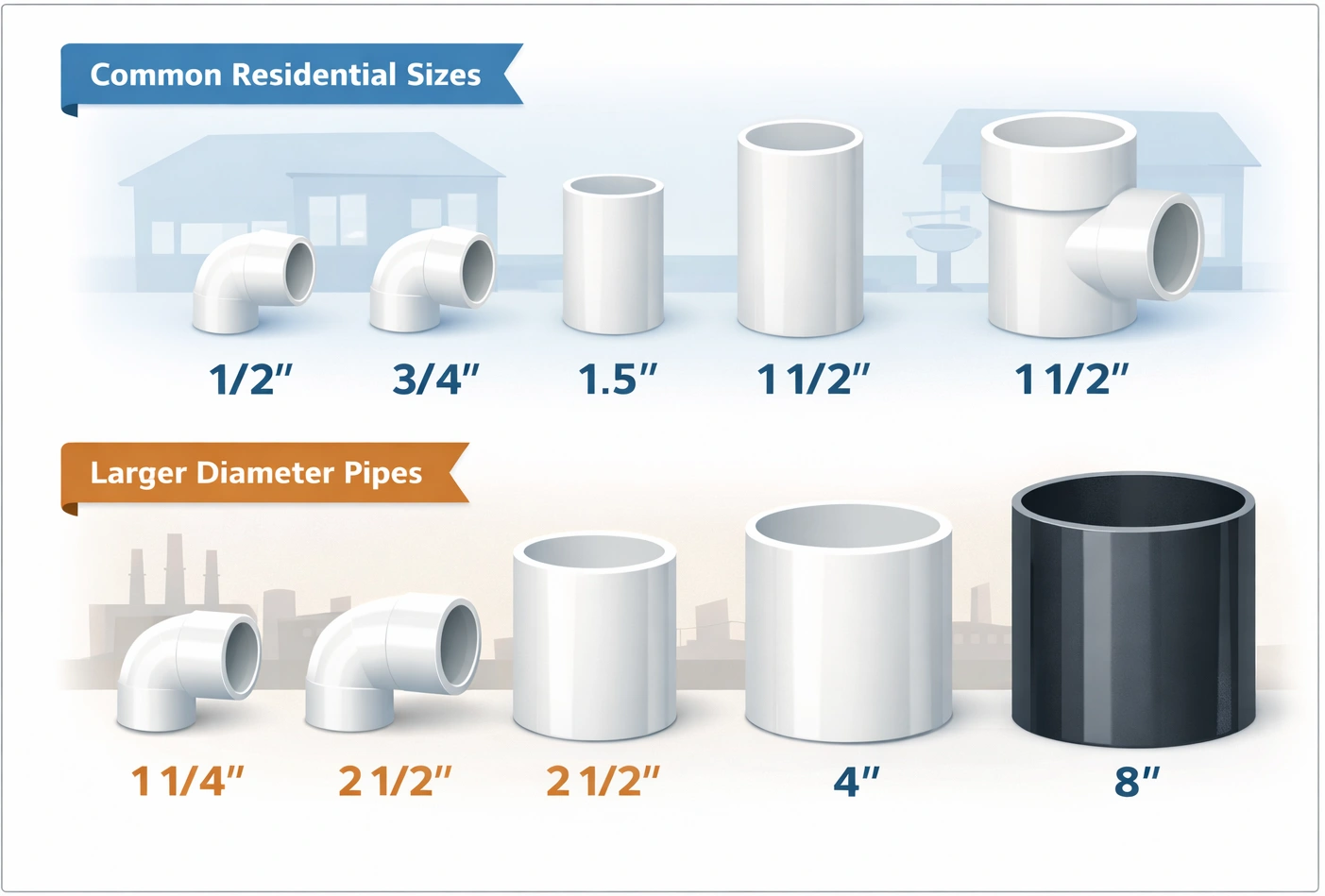
Selecting the correct pipe size prevents pressure drops and drainage issues.
Common Residential Pipe Sizes
-
1 2 pvc pipe fittings: Used for small water supply lines
-
3 4 pvc pipe fittings: Common in bathroom and kitchen supply
-
1.5 inch pvc pipe: Suitable for drainage lines
-
1 1 2 pvc pipe fittings: Frequently used in waste water systems
These sizes work well in most home plumbing layouts.
Larger Diameter Pipes
-
2 1 2 pvc pipe fittings: Used in larger drainage systems
-
1 1 4 pvc pipe fittings: Often for intermediate flow lines
-
1 4 pvc pipe fittings: Suitable for light residential applications
-
8 pvc pipe: Common in main drainage or commercial setups
Large diameters are typically used in industrial or municipal systems.
PVC Pipe Size Chart
| Application | Recommended Pipe Size | Typical Fittings | Use Case |
|---|---|---|---|
| Wash Basin Supply | 1/2 inch | Elbow, Coupler | Light water flow |
| Shower Line | 3/4 inch | Tee, Elbow | Medium flow |
| Kitchen Drain | 1.5 inch | Trap, Reducer | Wastewater drainage |
| Main Water Line | 1 1/2 inch | Coupler, Valve | High flow |
| Commercial Drainage | 2 1/2 inch or 8 inch | Tee, Elbow | Large-scale drainage |
Choosing the correct diameter ensures balanced pressure and smooth drainage.
How to Choose the Right PVC Pipe for Plumbing
Consider Water Pressure
Different systems require different pressure ratings. For supply lines:
-
Small homes: 1/2 inch or 3/4 inch
-
Larger homes: 1 1 2 pvc pipe fittings for main distribution
Matching pressure rating with pipe thickness ensures durability.
Drainage vs Water Supply
Drainage systems require:
-
Larger diameters
-
Proper slope
-
Strong joint sealing
Supply lines require:
-
Pressure-rated rigid pvc pipe
-
Reliable plumbing pvc pipe fittings
Always match fittings to pipe size to avoid leakage.
Standard Length of PVC Pipes
PVC pipes are commonly available in:
-
3 meters
-
6 meters
Longer pipes reduce the number of joints, which lowers the risk of leakage. However, shorter sections are easier to transport and handle during installation.
Proper Placement of PVC Pipe and Fittings
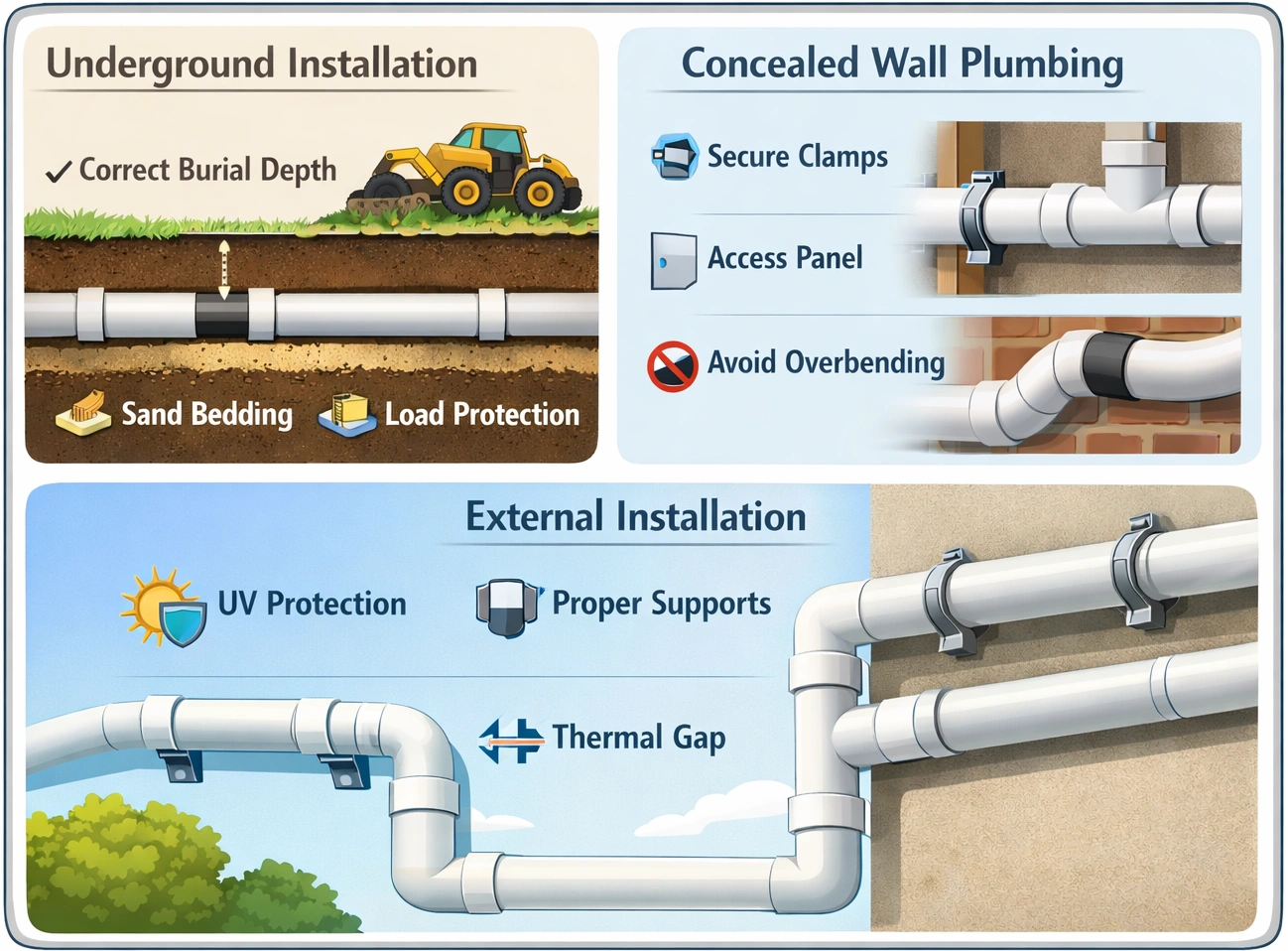
Correct placement improves performance and extends lifespan.
Underground Installation
-
Maintain proper burial depth
-
Use sand bedding for support
-
Protect from heavy external loads
Rigid pvc pipe is ideal for underground use due to its strength.
Concealed Wall Plumbing
-
Ensure proper clamping
-
Leave access points for maintenance
-
Avoid excessive bending
Correct placement prevents cracks and leakage over time.
External or Exposed Installation
-
Protect from UV exposure
-
Use adequate support spacing
-
Allow space for thermal expansion
Good positioning prevents structural stress.
PVC Pipe and Fittings vs Other Plumbing Materials
| Feature | PVC | CPVC | GI | HDPE |
|---|---|---|---|---|
| Cost | Affordable | Moderate | Higher | Moderate |
| Corrosion Resistance | Excellent | Excellent | Low | Excellent |
| Installation Ease | Easy | Easy | Complex | Moderate |
| Suitable for Hot Water | Limited | Yes | Yes | Limited |
| Lifespan | 40–50 years | 40–50 years | 20–25 years | 40+ years |
PVC remains one of the most cost-effective materials for cold water and drainage systems.
Common Installation Mistakes to Avoid
-
Choosing incorrect pipe diameter
-
Poor solvent cement application
-
Over-tightening fittings
-
Mixing incompatible sizes
-
Ignoring slope in drainage systems
Avoiding these errors ensures long-term performance of pvc pipe and fittings.
Maintenance and Lifespan of PVC Plumbing Systems
PVC plumbing systems require minimal maintenance. However:
-
Check joints regularly
-
Monitor for leaks
-
Replace damaged fittings promptly
Proper care extends the life of pvc plumbing fittings and reduces repair costs.
Why Choosing a Reliable Manufacturer Matters
The quality of pvc pipe and fittings directly affects plumbing safety. A reliable manufacturer ensures:
-
Uniform wall thickness
-
Pressure-tested products
-
Durable plumbing pvc pipe fittings
-
Compliance with industry standards
Using high-quality materials prevents frequent repairs.
About Scotto Pipes
Scotto Pipes is a trusted manufacturer of PVC and UPVC piping solutions for plumbing, agriculture, and industrial applications. With a focus on durability and performance, Scotto Pipes supplies high-quality pvc pipe and fittings designed for reliable water distribution systems. Their commitment to precision manufacturing ensures consistent pipe strength and dependable pvc plumbing fittings for residential and commercial projects.
Find Best Pipes for Plumbing System
Conclusion
Selecting the correct pvc pipe and fittings is crucial for building a durable plumbing system. Proper size, length, and placement help maintain water pressure and prevent leakage. Whether using 1/2 inch supply lines or larger drainage pipes, choosing quality pvc plumbing fittings ensures long-term reliability.
By understanding sizing and installation guidelines, you can create a safe, efficient, and long-lasting plumbing setup.
FAQs
1. Which pvc pipe and fittings are best for residential plumbing?
Standard 1/2 inch and 3/4 inch pipes with compatible fittings work well for most homes.
2. What is the standard length of pvc pipe for plumbing?
PVC pipes are usually available in 3-meter and 6-meter lengths.
3. Can pvc plumbing fittings be reused?
It is not recommended, as solvent joints create permanent bonds.
4. Is rigid pvc pipe suitable for underground use?
Yes, it is strong and corrosion-resistant, making it ideal for burial.
5. How do I choose the right pipe diameter for drainage?
Select diameter based on water volume and slope requirements, typically 1.5 inch or larger.