
Drip irrigation systems are designed to save water while delivering it directly to plant roots. Choosing the right PVC pipe for irrigation systems plays a major role in how efficiently the system performs over time. These pipes are widely used because they are durable, cost-effective, and easy to install. Whether you manage a small farm or a large agricultural field, understanding the right PVC pipe options can help improve water flow and reduce maintenance issues.
Why PVC Pipes Are Ideal for Drip Irrigation Systems
PVC pipes have become a preferred choice in modern irrigation due to their consistent performance and adaptability.
Pipeline Compatibility with Drip and Sprinkler Systems
A well-designed PVC pipeline is not limited to drip irrigation alone. The same pipeline network can also support a PVC pipe for sprinkler system, making it a flexible solution for farms using mixed irrigation methods. PVC pipes maintain steady pressure, which is essential for uniform water spray in sprinklers. Their compatibility with standard joints and fittings allows easy conversion between drip lines and sprinkler setups without major system changes.
Key Advantages of PVC Piping
-
Made from polyvinyl chloride pipes, offering excellent corrosion resistance
-
Lightweight, making transportation and installation easier
-
Smooth internal surface reduces friction loss
-
Long service life in agricultural environments
-
Compatible with a wide range of PVC pipe fittings
PVC vs Other Pipe Materials for Drip Irrigation
| Material | Durability | Cost | Maintenance | Suitability |
|---|---|---|---|---|
| PVC Pipes | High | Affordable | Low | Excellent |
| HDPE | Moderate | Higher | Medium | Good |
| Metal Pipes | High | Expensive | High | Limited |
| Rubber Hoses | Low | Cheap | High | Short-term |
PVC pipelines stand out due to their balance between durability and cost, making them suitable for long-term drip irrigation systems.
Types of Pipes Used in Drip Irrigation
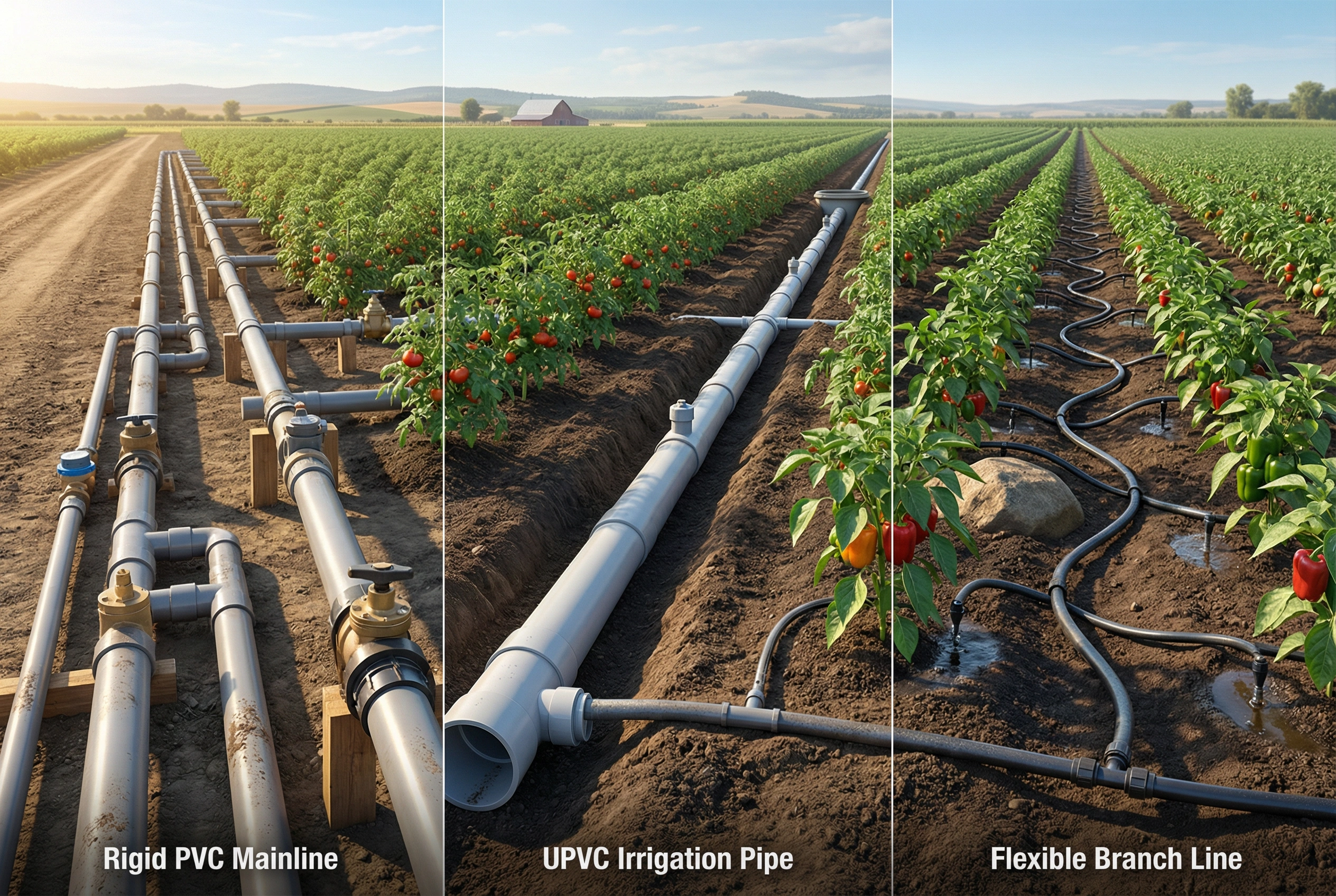
Different irrigation setups require different pipe types based on pressure, layout, and flexibility needs.
Rigid Pipes
Rigid PVC pipes are commonly used as mainlines and sub-main lines in drip irrigation systems.
-
Strong structure for consistent water distribution
-
Suitable for underground installations
-
Often used with sch 40 PVC pipe standards
UPVC Pipes for Drip Irrigation
UPVC pipes are a non-plasticized form of PVC and are ideal for agricultural use. In agricultural installations, installers often prefer UPVC for long-term underground networks due to reduced chemical interaction.
-
Higher strength compared to standard PVC
-
Better resistance to chemicals and fertilizers
-
Ideal for long-term irrigation networks
Flexible PVC Pipes
Flexible options are useful in uneven terrain or compact spaces.
-
Easier to bend around obstacles
-
Faster installation
-
Best suited for secondary or branch lines
How to Choose the Right PVC for Your Drip Irrigation System
Selecting the right pipe improves system efficiency and reduces water loss.
Factors to Consider Before Buying
-
Water pressure: Choose pipes rated for your system pressure
-
Soil conditions: Rocky soil may require thicker pipes
-
Crop type: Different crops need different water flow rates
-
Sun exposure: UV-resistant pipes last longer outdoors
Pipe Size and Pressure Rating Explained
Common pipe sizes used in drip irrigation include:
-
1/2 PVC pipe for small garden systems
-
1 1 2 PVC pipe for medium farm layouts
-
2 1 2 PVC pipe for main irrigation lines
Pressure-rated pipes such as sch 40 PVC are preferred for steady water flow and reduced leakage risk.
Top PVC Options for Drip Irrigation Systems
Choosing the right pipe type depends on usage, pressure, and field size.
Comparison of PVC Pipe Types Based on Use Case
| PVC Pipe Type | Best Used For | Pressure Capacity | Durability | Cost |
|---|---|---|---|---|
| Rigid Pipe | Main irrigation lines | High | Very High | Medium |
| UPVC Pipe | Long-term agriculture | High | Very High | Medium |
| Flexible Pipe | Branch lines | Medium | Moderate | Low |
| Black PVC Pipe | Outdoor exposure | Medium | High | Medium |
This comparison helps farmers and installers choose the most suitable drip irrigation PVC pipe based on field requirements.
Installation and Maintenance Tips for PVC Drip Irrigation Pipes
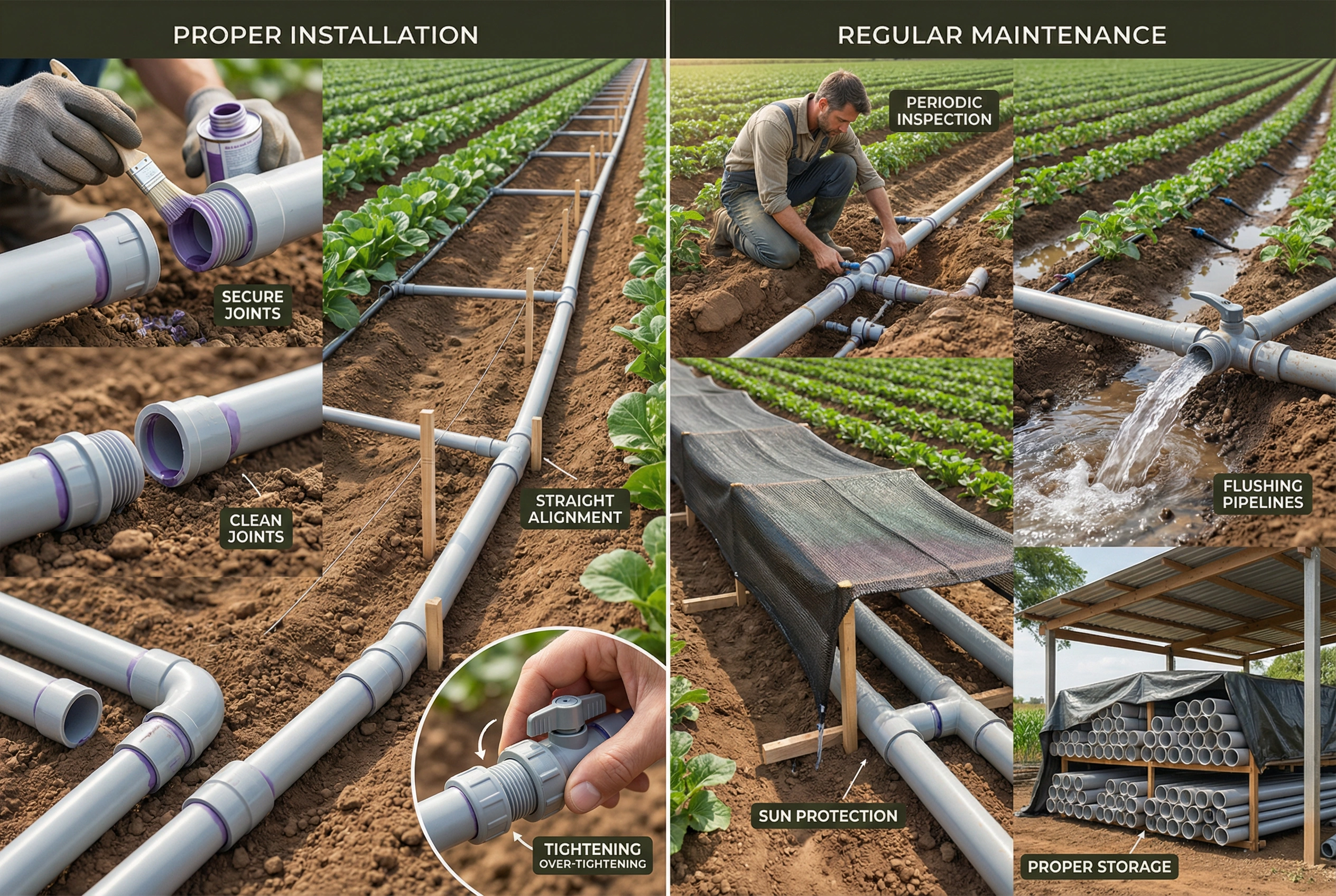
Proper installation ensures leak-free performance and longer service life.
Best Practices for Installation
-
Use compatible PVC irrigation pipe fittings
-
Ensure proper alignment before jointing
-
Avoid over-tightening connections
-
Allow proper curing time for solvent joints
Maintenance Tips to Extend Pipe Life
-
Inspect joints and fittings periodically
-
Flush pipelines to prevent clogging
-
Protect exposed pipes from direct sunlight
-
Store unused pipes in shaded areas
Regular care keeps PVC drip irrigation fittings functioning efficiently throughout the irrigation season.
Why Quality Matters When Choosing PVC Pipes
Low-quality pipes can lead to leaks, uneven water distribution, and higher replacement costs. Certified manufacturers ensure consistent thickness, proper pressure ratings, and compatibility with standard PVC pipe fittings. Quality pipes also help maintain steady flow in PVC pipe for sprinkler systems and drip irrigation applications.
Applications of PVC Pipes in Agricultural Drip Irrigation
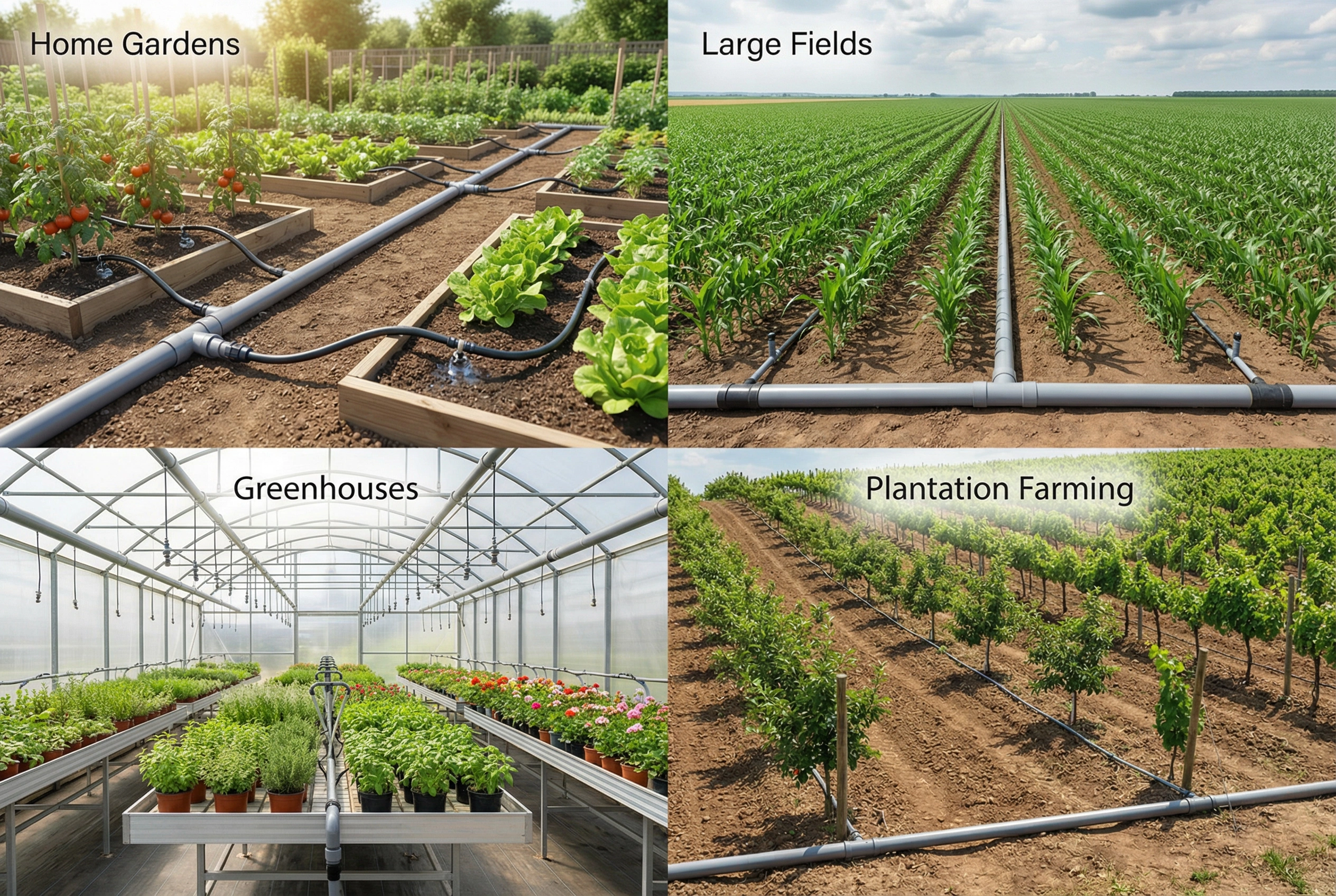
PVC pipes are used across multiple agricultural setups, including:
-
Small farms and home gardens
-
Large agricultural fields
-
Greenhouses and polyhouses
-
Horticulture and plantation farming
Their adaptability makes them suitable for various crop types and terrains.
Common Mistakes to Avoid When Selecting Irrigation Pipes
-
Choosing incorrect pipe size for water flow
-
Ignoring pressure ratings during selection
-
Using low-grade or non-certified pipes
-
Poor jointing and incompatible fittings
-
Overlooking long-term maintenance needs
Avoiding these mistakes helps maintain consistent irrigation performance.
Why Scotto Pipes Is a Reliable Choice for Drip Irrigation Systems
Scotto Pipes is a manufacturer of PVC and UPVC piping solutions designed for plumbing, agriculture, and industrial applications. The company focuses on quality, consistency, and durability to meet modern irrigation needs. Scotto Pipes offers a wide range of pipe sizes and fittings suitable for drip and sprinkler irrigation systems. With strict quality control and compliance with industry standards, Scotto Pipes supports farmers and agri-projects with dependable piping solutions built for long-term performance.
Find Best Pipes for Drip Irrigation
Conclusion
PVC pipes remain one of the most reliable choices for drip irrigation systems due to their durability, flexibility, and cost efficiency. Understanding different pipe types, sizes, and pressure ratings helps in building an effective irrigation setup. By choosing quality PVC pipes and fittings, farmers can ensure consistent water delivery and long-term system performance.
Frequently Asked Questions (FAQs)
1. Which PVC pipe is best for drip irrigation systems?
Rigid PVC and UPVC pipes are best for main lines, while flexible PVC works well for branch connections.
2. Can UPVC pipes be used for agricultural drip irrigation?
Yes, UPVC pipes are highly suitable due to their strength and resistance to chemicals.
3. What pressure rating is ideal for drip irrigation PVC pipes?
Sch 40 PVC pipes are commonly used for stable pressure and reliable flow.
4. Are PVC pipes better than HDPE for drip irrigation?
PVC pipes offer easier installation and better rigidity, making them ideal for fixed irrigation systems.
5. How do I maintain PVC pipes in a drip irrigation system?
Regular inspection, flushing, and protecting pipes from UV exposure helps extend their lifespan.