
High-pressure water systems form the backbone of residential, commercial, agricultural, and industrial infrastructure. Whether it’s a high-rise apartment, a factory unit, or a municipal supply network, maintaining consistent pressure without leakage is essential. The material you choose directly affects durability, efficiency, and long-term maintenance costs.
In recent years, upvc pipes have become a preferred solution for engineers and contractors. Their strength, corrosion resistance, and cost-effectiveness make them ideal for demanding environments. When selecting an upvc pipe for water supply, understanding its benefits in high-pressure applications helps ensure reliable system performance for decades.
What Are uPVC Pipes and How Do They Work?
Unplasticized Polyvinyl Chloride (uPVC) is a rigid and durable form of PVC that does not contain plasticizers. This gives the material enhanced strength and structural stability. Unlike flexible plastic piping, upvc pipes maintain their shape and pressure-bearing capacity even under constant water flow.
The smooth inner surface of an upvc pipe for water supply reduces friction loss. This ensures higher flow efficiency and better pressure retention across long distances. In a well-designed upvc pipeline, this characteristic plays a major role in energy savings and operational efficiency.
Another advantage is chemical resistance. uPVC does not react with salts, minerals, or mild chemicals commonly found in water. This makes it highly suitable for potable water as well as irrigation systems.
Why Are uPVC Pipes Suitable for High-Pressure Water Systems?
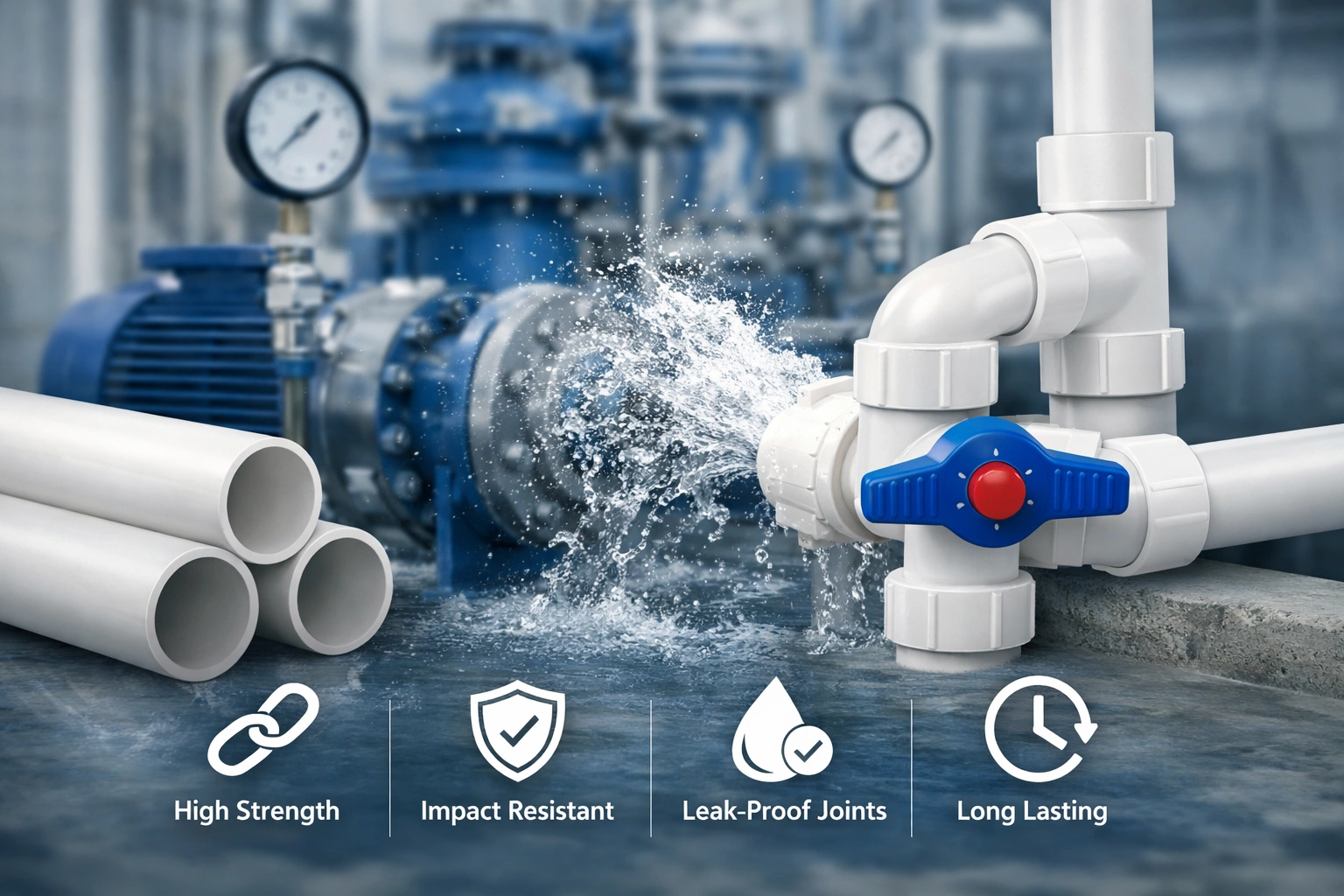
High-pressure systems require materials that can withstand internal stress without cracking or leaking. Upvc pipes for high pressure water system installations are specifically designed to handle significant pressure loads while maintaining dimensional stability.
Key Benefits of uPVC in High-Pressure Applications
-
High tensile strength
-
Excellent impact resistance
-
Non-corrosive properties
-
Leak-proof jointing with upvc pipe fittings
-
Long operational lifespan
Unlike metal pipes, white upvc pipe options do not rust or scale. This prevents internal diameter reduction and maintains steady pressure flow. When combined with reliable upvc fittings, the system becomes structurally secure and resistant to leakage.
For municipal projects or industrial plants, a properly installed upvc pipeline offers durability without the high maintenance costs associated with traditional materials.
How Do uPVC Pipes Compare to Other Piping Materials?
When choosing a piping material, performance comparison is essential. Let’s evaluate how upvc pipes and fittings stand against other commonly used materials.
| Feature | uPVC Pipes | GI Pipes | CPVC Pipes |
|---|---|---|---|
| Corrosion Resistance | Excellent | Poor | Excellent |
| Pressure Capacity | High | Moderate | High |
| Maintenance Needs | Low | High | Moderate |
| Lifespan | 25–50 Years | 10–20 Years | 20–30 Years |
| Cost Efficiency | Economical | Expensive | Higher |
GI pipes corrode over time, leading to leakage and contamination. CPVC pipes handle hot water effectively but are typically more expensive. For cold high-pressure applications, an upvc pipe for water supply remains the most practical choice.
Additionally, the lightweight nature of upvc pipes simplifies installation, especially in large-scale infrastructure projects.
What Sizes of uPVC Pipes Are Used in High-Pressure Systems?
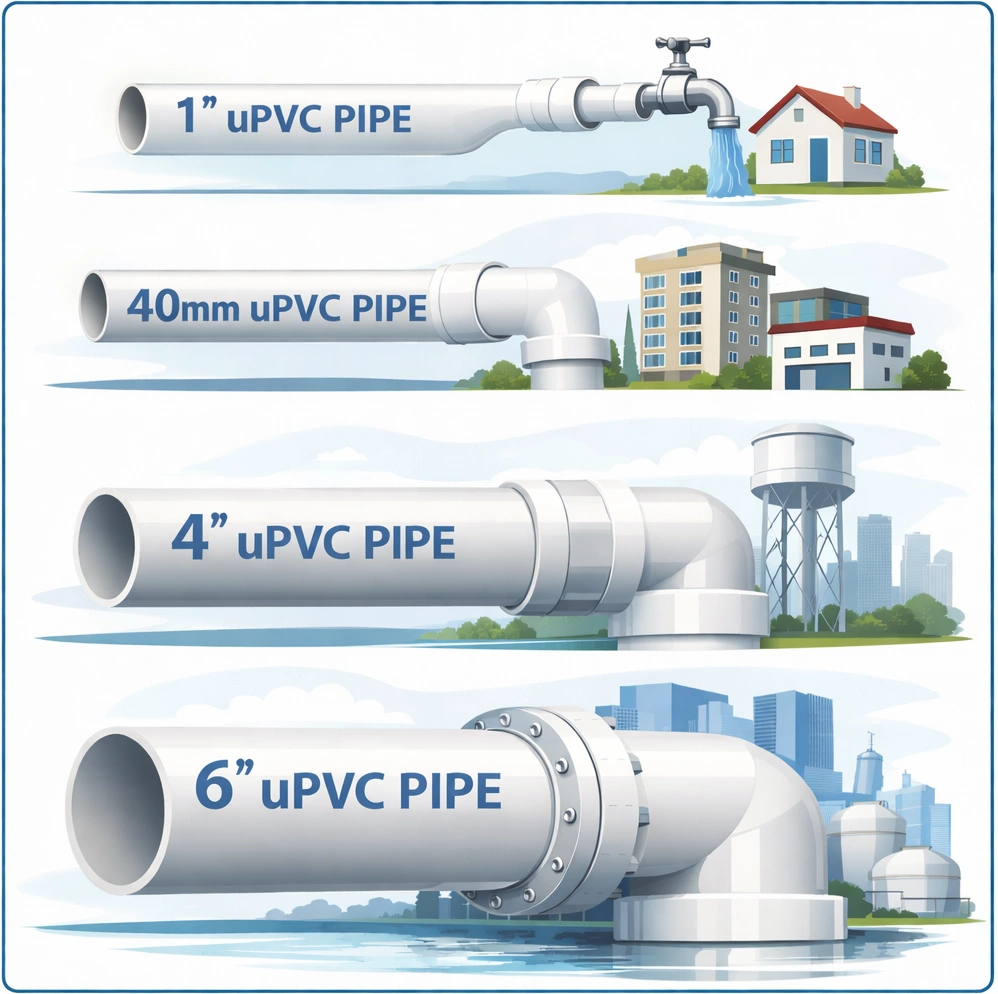
Selecting the correct pipe diameter ensures optimal pressure management and water flow. Different applications require different sizes based on water demand and system design.
1 Inch uPVC Pipe for Residential Supply
A 1 inch upvc pipe is widely used in homes and small offices. It provides adequate pressure balance and consistent water distribution for daily needs.
40mm uPVC Pipe for Medium Applications
The 40mm upvc pipe is suitable for apartment complexes and light commercial spaces. It offers improved flow capacity while maintaining high-pressure resistance.
4 Inch uPVC Pipe for Large Distribution Lines
A 4 inch upvc pipe is commonly installed in larger distribution networks. It supports higher flow rates and ensures steady pressure across extended distances.
6 Inch uPVC Pipe for Industrial and Municipal Use
For heavy-duty systems, a 6 inch upvc pipe is ideal. It efficiently handles substantial water volumes in municipal and industrial water supply systems.
Each size works seamlessly with compatible upvc pipe fittings and upvc fittings. Correct jointing ensures the overall upvc pipeline remains leak-proof and pressure resistant.
What Makes uPVC Pipelines Durable and Low Maintenance?
Durability is a major reason professionals prefer upvc pipes. The material does not corrode, scale, or degrade easily under environmental exposure.
Long-Term Advantages of uPVC Pipelines
-
Resistance to chemical reactions
-
Protection against UV exposure
-
Minimal friction loss
-
Reduced maintenance requirements
Because upvc pipes and fittings do not rust, there is no need for protective coatings or frequent replacements. Even in demanding upvc pipes for high pressure water system installations, structural integrity remains intact for decades.
This long service life reduces operational costs and enhances overall system reliability.
Are uPVC Pipes Safe for Drinking Water Supply?
Safety is a top concern in potable water systems. A certified upvc pipe for water supply is manufactured using non-toxic materials that do not affect water taste or quality.
The smooth internal surface of white upvc pipe options prevents bacterial growth and contamination. In addition, strong bonding with upvc pipe fittings eliminates leakage points where external contaminants might enter.
Municipal authorities and private developers widely use upvc pipes and fittings for drinking water networks due to their hygienic and durable properties.
How Do uPVC Pipe Fittings Improve High-Pressure Performance?
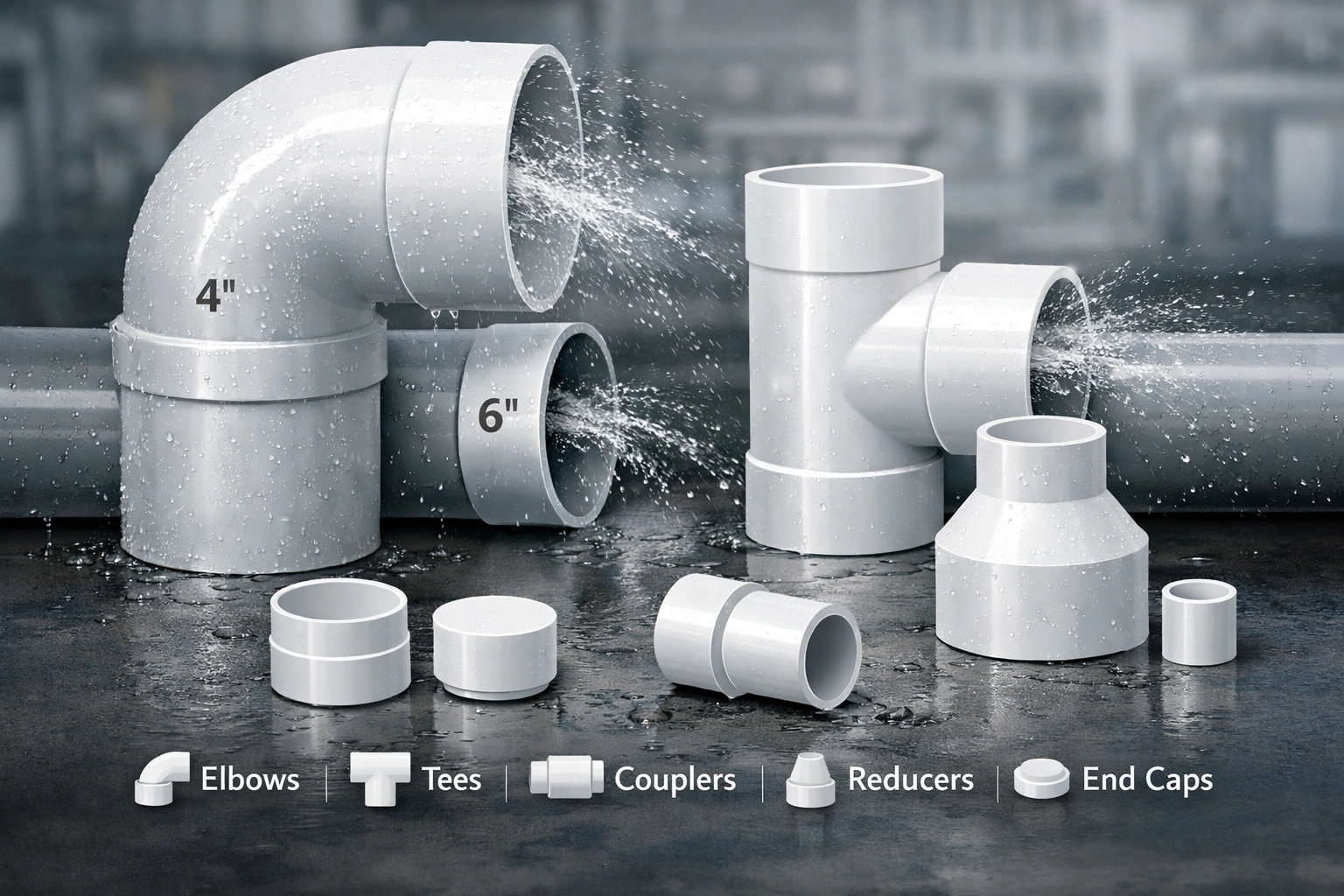
No piping system functions effectively without proper fittings. Upvc pipe fittings ensure directional changes, branch connections, and pipe extensions without compromising pressure strength.
Common Types of uPVC Fittings
-
Elbows
-
Tees
-
Couplers
-
Reducers
-
End caps
In high-demand systems using 4 inch upvc pipe or 6 inch upvc pipe, fittings distribute stress evenly across joints. Even in smaller setups using a 1 inch upvc pipe or 40mm upvc pipe, high-quality fittings prevent pressure drops and leakage.
For any upvc pipes for high pressure water system setup, precision-engineered fittings are essential for long-term stability.
Why Choose Scotto Pipes India for uPVC Pipes and Fittings?
When investing in water infrastructure, quality matters. Scotto Pipes delivers premium-grade upvc pipes and fittings designed to meet modern engineering standards.
The company provides a complete range of upvc pipes, including 1 inch upvc pipe, 40mm upvc pipe, 4 inch upvc pipe, and 6 inch upvc pipe options. Their durable white upvc pipe range is especially suitable for potable water supply.
With strict quality control processes and reliable upvc pipe fittings, Scotto Pipes ensures every upvc pipeline performs efficiently in high-pressure conditions. Their solutions are engineered for longevity, safety, and cost-effectiveness.
Find High-Pressure Water Pipes
Conclusion: Are uPVC Pipes the Right Choice for High-Pressure Water Systems?
High-pressure water networks demand reliability, strength, and efficiency. Upvc pipes offer a powerful combination of durability, corrosion resistance, and cost savings. Their smooth internal surface ensures efficient water flow, while robust upvc fittings maintain leak-proof performance.
From residential plumbing using a 1 inch upvc pipe to municipal infrastructure built with a 6 inch upvc pipe, uPVC adapts to diverse needs. Combined with precision-engineered upvc pipe fittings, a well-designed upvc pipeline provides decades of dependable service.
For anyone planning a modern upvc pipe for water supply system, investing in high-quality upvc pipes and fittings is a smart, future-ready decision.
FAQ About uPVC Pipes for High-Pressure Water Systems
1. What pressure rating can uPVC pipes handle?
Upvc pipes for high pressure water system installations are available in multiple pressure classes, typically designed to handle 6–16 kg/cm² or higher.
2. Which size uPVC pipe is best for residential use?
A 1 inch upvc pipe or 40mm upvc pipe is generally sufficient for most household water supply systems.
3. Are uPVC pipelines suitable for underground installation?
Yes, a properly installed upvc pipeline performs exceptionally well underground due to its corrosion resistance.
4. Do uPVC fittings affect system durability?
High-quality upvc pipe fittings and upvc fittings play a crucial role in maintaining pressure stability and preventing leakage.
5. Is white uPVC pipe safe for drinking water?
Yes, white upvc pipe products designed for potable applications are non-toxic and safe for drinking water distribution.