
Solar water heating systems rely heavily on the quality of their piping network. Choosing the right pipe material ensures efficient heat transfer, long service life, and minimal maintenance. UPVC pipes for solar water heating system applications have gained popularity due to their durability, corrosion resistance, and cost-effectiveness. This guide explains how UPVC pipes work in solar water heating systems, their benefits, limitations, and how to choose the right solution for long-term performance.
What Are UPVC Pipes?
Definition and Composition of UPVC Material
UPVC stands for unplasticized polyvinyl chloride, a rigid form of PVC that does not contain plasticizers. This gives the material high strength, chemical stability, and resistance to deformation under pressure. Unlike flexible PVC, UPVC pipework maintains its shape even in demanding plumbing and thermal applications.
Key Properties of UPVC Pipework
UPVC pipes and fittings are widely used because they offer:
-
Excellent corrosion and chemical resistance
-
Smooth inner surfaces for efficient water flow
-
Lightweight structure for easy handling
-
Long operational life with minimal maintenance
These properties make UPVC pipelines suitable for controlled hot water circulation in solar systems.
Understanding Solar Water Heating Systems
How a Solar Water Heating System Works
A solar water heating system uses solar collectors to absorb heat from sunlight. This heat is transferred to water, which then flows through a network of pipes to storage tanks or usage points. The pipe material must withstand continuous temperature variation while maintaining water quality and pressure stability.
Types of Solar Water Heating Systems
-
Active systems: Use pumps to circulate water
-
Passive systems: Rely on natural convection
In both systems, the performance of the UPVC pipe fittings and pipelines directly affects efficiency and reliability.
Why UPVC Pipes Are Used in Solar Water Heating Systems
Thermal Performance of UPVC Pipework
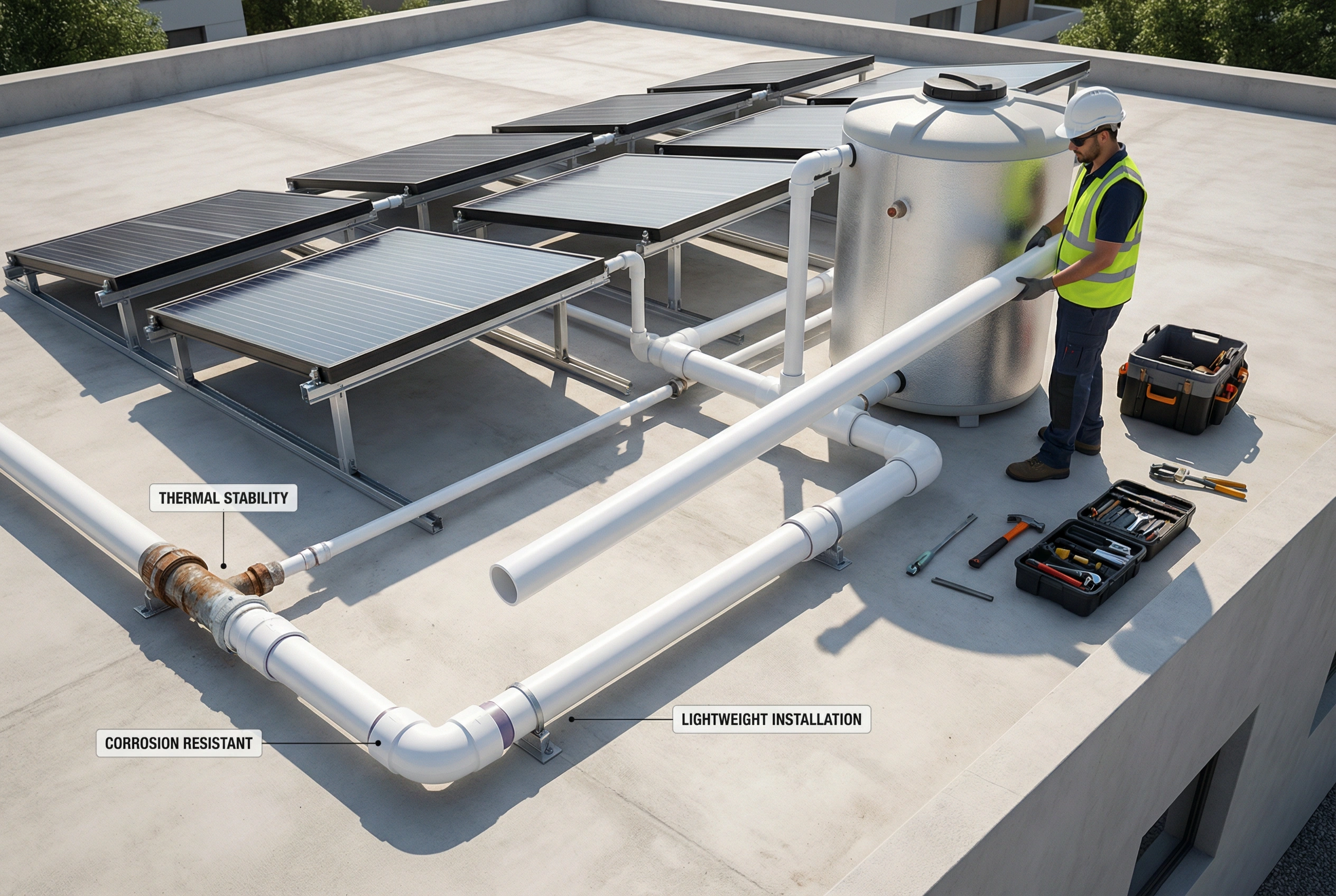
These pipes are designed to handle moderate hot water temperatures commonly found in domestic and commercial solar water heating systems. When correctly selected, they maintain dimensional stability and pressure strength over long periods.
Resistance to Corrosion and Scaling
Unlike metal pipes, UPVC pipelines do not corrode or scale when exposed to hard water. This helps maintain consistent flow rates and reduces long-term maintenance costs, especially in rooftop solar installations.
Lightweight and Easy Installation
UPVC pipework is lightweight, which simplifies transportation and installation. Solvent cement jointing allows leak-proof connections without specialized tools, saving time and labor costs.
UPVC Pipes vs Other Pipe Materials in Solar Water Systems
UPVC vs CPVC Pipes
These pipes are rigid and cost-effective, while CPVC handles higher temperatures but at a higher cost. For standard solar water heating system ranges, UPVC is often sufficient when used with proper design.
UPVC vs Metal Pipes (Copper / GI)
Metal pipes conduct heat well but are prone to corrosion, scaling, and higher installation costs. UPVC piping systems offer corrosion resistance, lower cost, and easier installation, making them suitable for controlled hot water flow zones.
UPVC vs PPR Pipes
PPR pipes are flexible and suitable for higher temperatures, but UPVC pipelines provide better chemical resistance and dimensional stability in outdoor solar installations.
Comparison Table: Pipe Materials for Solar Water Heating
|
Feature |
UPVC Pipes |
CPVC Pipes |
Copper Pipes |
PPR Pipes |
|
Temperature Handling |
Moderate |
High |
Very High |
High |
|
Corrosion Resistance |
Excellent |
Excellent |
Low |
Excellent |
|
Installation Cost |
Low |
Medium |
High |
Medium |
|
Maintenance |
Low |
Low |
High |
Low |
|
Solar Suitability |
High |
High |
Medium |
High |
Advantages of Using UPVC Pipes in Solar Water Heating Systems
Solar water heating system installations using UPVC piping solutions offer several benefits:
-
Long service life with minimal degradation
-
Smooth inner walls for efficient water flow
-
Compatibility with a wide range of UPVC fittings
-
Cost-effective alternative to metal piping
-
Environment-friendly and recyclable material
These advantages make UPVC piping solutions and fittings a reliable option for residential and commercial solar projects.
Limitations of UPVC Pipes in Solar Applications
While UPVC pipelines perform well, they do have limitations:
-
Not suitable for extremely high-temperature zones
-
Requires UV-protected variants or insulation for prolonged sun exposure
Pros vs Cons Table
|
Pros |
Cons |
|
Corrosion-free |
Limited high-temperature tolerance |
|
Lightweight |
Requires UV protection outdoors |
|
Low maintenance |
Not ideal for industrial steam |
Key Factors to Consider When Choosing UPVC Pipes for Solar Water Heaters
Temperature Rating
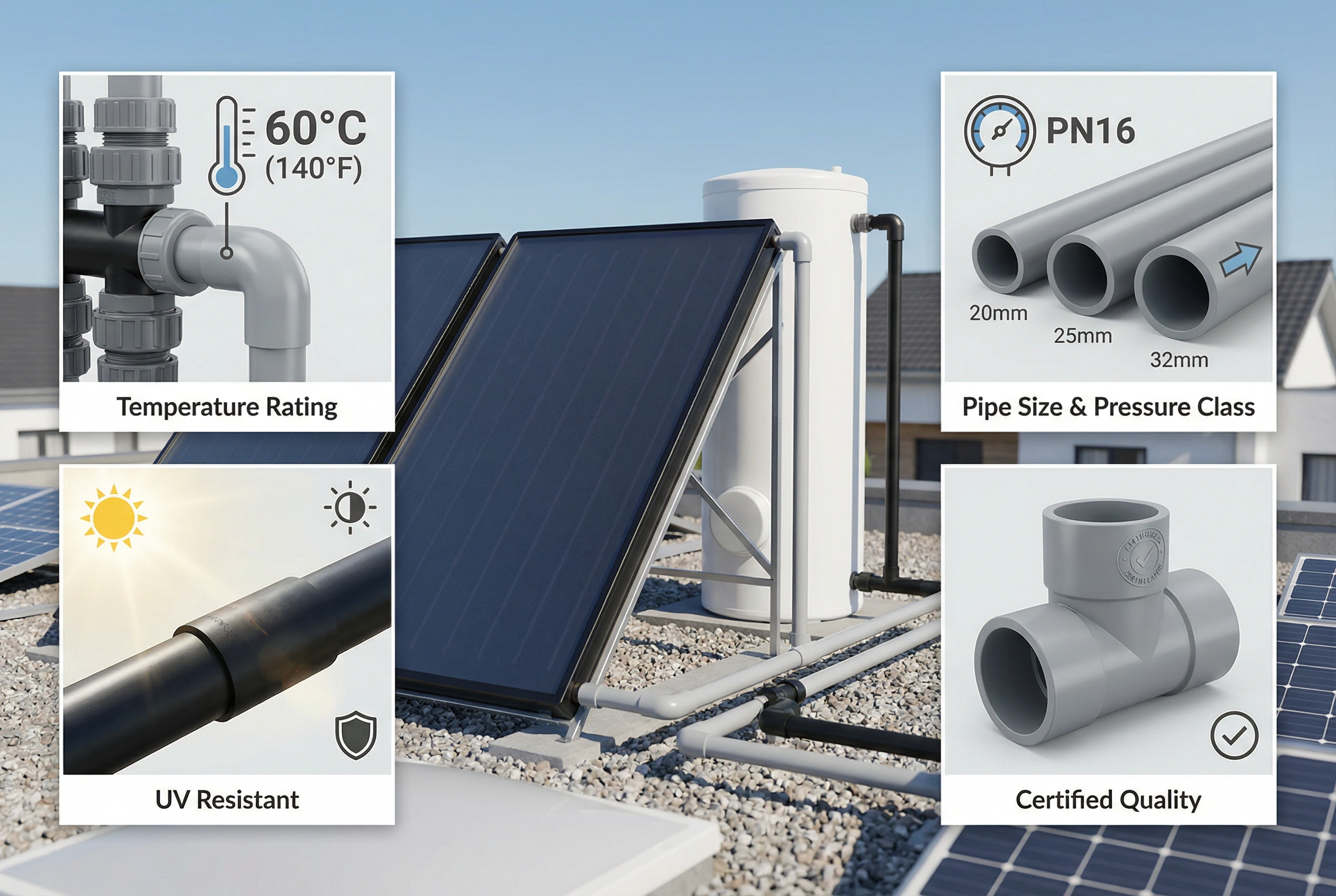
Always select UPVC piping rated for the expected operating temperature and avoid exceeding manufacturer specifications.
Pipe Diameter and Pressure Class
Correct sizing ensures efficient circulation and prevents pressure loss. Options like UPVC Schedule 40 and UPVC SCH80 are chosen based on pressure requirements.
UV Resistance and Outdoor Exposure
For rooftop installations, using black UPVC pipe or UV-stabilized variants reduces degradation from sunlight.
Quality Standards and Certifications
Ensure pipes comply with industry standards and are manufactured by trusted suppliers.
Installation Best Practices for UPVC Piping Systems in Solar Water Heating
-
Use proper solvent cement for secure joints
-
Allow for thermal expansion and contraction
-
Provide insulation where required
-
Avoid direct exposure without UV protection
Following best practices extends the life of UPVC pipe fittings and prevents leaks.
Maintenance and Lifespan of UPVC Piping in Solar Systems
Routine Inspection Tips
-
Check joints annually
-
Inspect for discoloration or brittleness
-
Ensure supports and clamps are intact
Expected Service Life
With correct installation, these pipes can last 25–50 years in solar water heating applications.
Use Cases of UPVC Piping in Solar Water Heating Systems
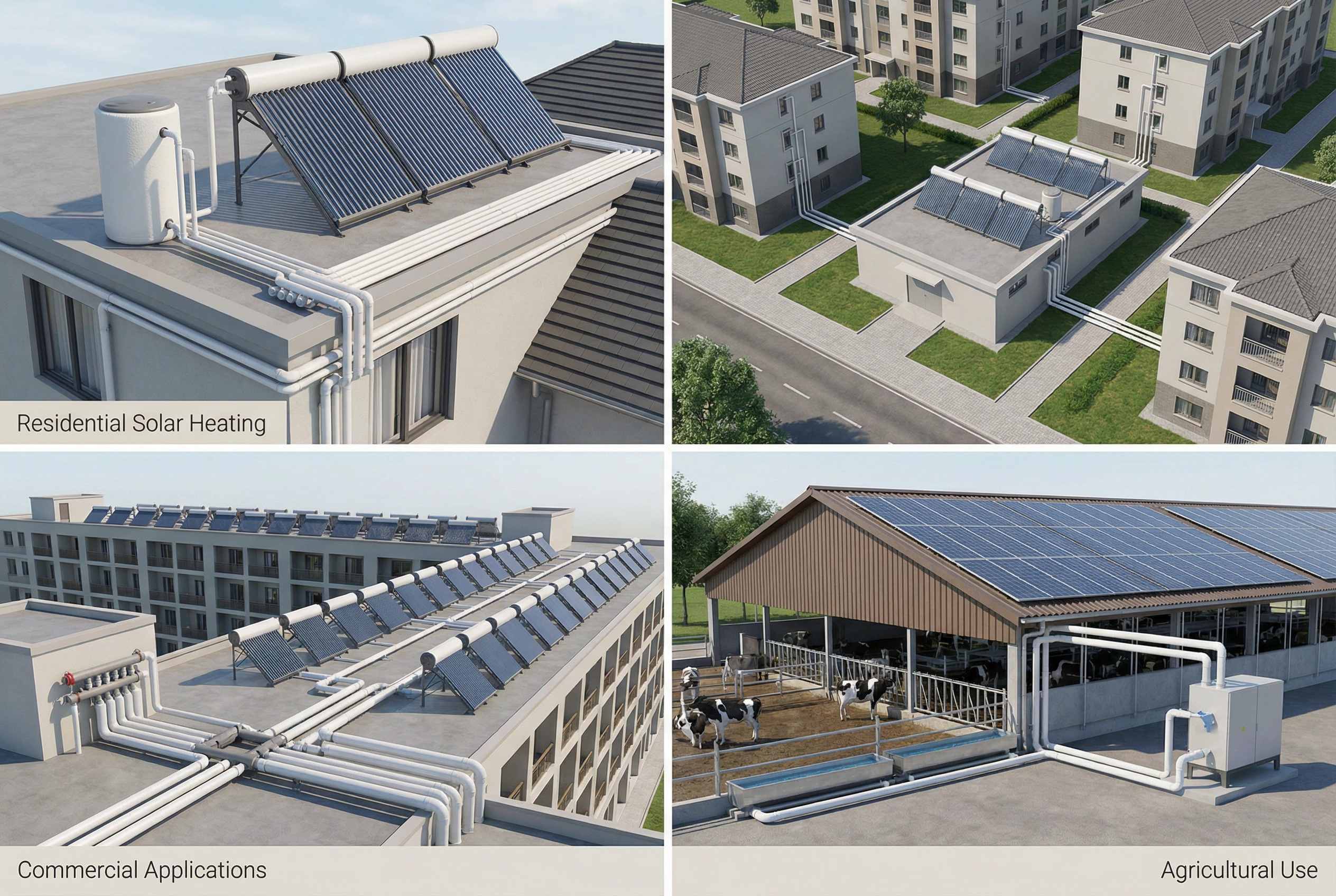
-
Residential rooftop solar heaters
-
Apartment complexes and housing societies
-
Commercial buildings and hotels
-
Agricultural hot water circulation
UPVC pipelines adapt well across different installation scales.
Why choose Scotto Pipes for solar water heating applications?
Scotto Pipes is a trusted manufacturer of high-quality UPVC pipes and fittings engineered for durability, pressure stability, and long-term performance. The company follows strict quality standards to ensure consistent flow, leak-proof joints, and resistance to corrosion and scaling. Scotto Pipes solutions are widely used across plumbing, agriculture, and industrial sectors, making them a dependable choice for solar water heating systems that require reliability, efficiency, and low maintenance over time.
Conclusion
UPVC pipelines provide a balanced combination of durability, cost efficiency, and corrosion resistance for solar water heating systems. When selected with the correct pressure class, temperature rating, and UV protection, they deliver long-term performance with minimal maintenance. For residential and light commercial solar installations, UPVC piping for solar water heating system setups remains a practical and reliable choice.
Frequently Asked Questions (FAQ)
1. What temperature can UPVC pipes withstand?
UPVC pipelines typically handle moderate hot water temperatures suitable for domestic solar systems.
2. Are UPVC pipes better than CPVC for solar heaters?
UPVC is more cost-effective, while CPVC is preferred for higher temperature requirements.
3. How long do UPVC pipes last in solar water systems?
With proper installation, they can last up to 50 years.
4. Are UPVC pipes suitable for rooftop solar installations?
Yes, especially when UV-protected or insulated properly.
5. Do UPVC pipes require insulation in solar applications?
Insulation is recommended to reduce heat loss and protect against UV exposure.