
Suction pipes play a critical role in moving water and other fluids in agriculture, construction, industry, and drainage systems. When selected and used correctly, they help maintain steady flow, support pump efficiency, and reduce unnecessary downtime. Scotto Pipes highlights that its suction pipe range is designed for efficient fluid transfer, pressure resistance, blockage prevention, and use across sectors such as agriculture, construction, industrial applications, marine, and sewage management. The company also states that its available range extends from 1/2 inch to 4 inch.
Still, even good-quality suction pipes can underperform when they are installed poorly, matched with the wrong application, or maintained irregularly. Many flow issues that people blame on pumps actually begin on the suction side. Technical guidance for pump suction design notes that high suction velocity, poor pipe layout, air entrainment, solids intake, and improper placement of fittings can reduce performance and increase wear.
This blog explains the most common mistakes to avoid while using suction pipes, including errors related to suction pipe line design, choosing a 2 inch suction pipe, 3 inch suction pipe, or 4 inch suction pipe, and selecting the right pvc suction pipe for the job.
What Are Suction Pipes and Why Do They Matter?
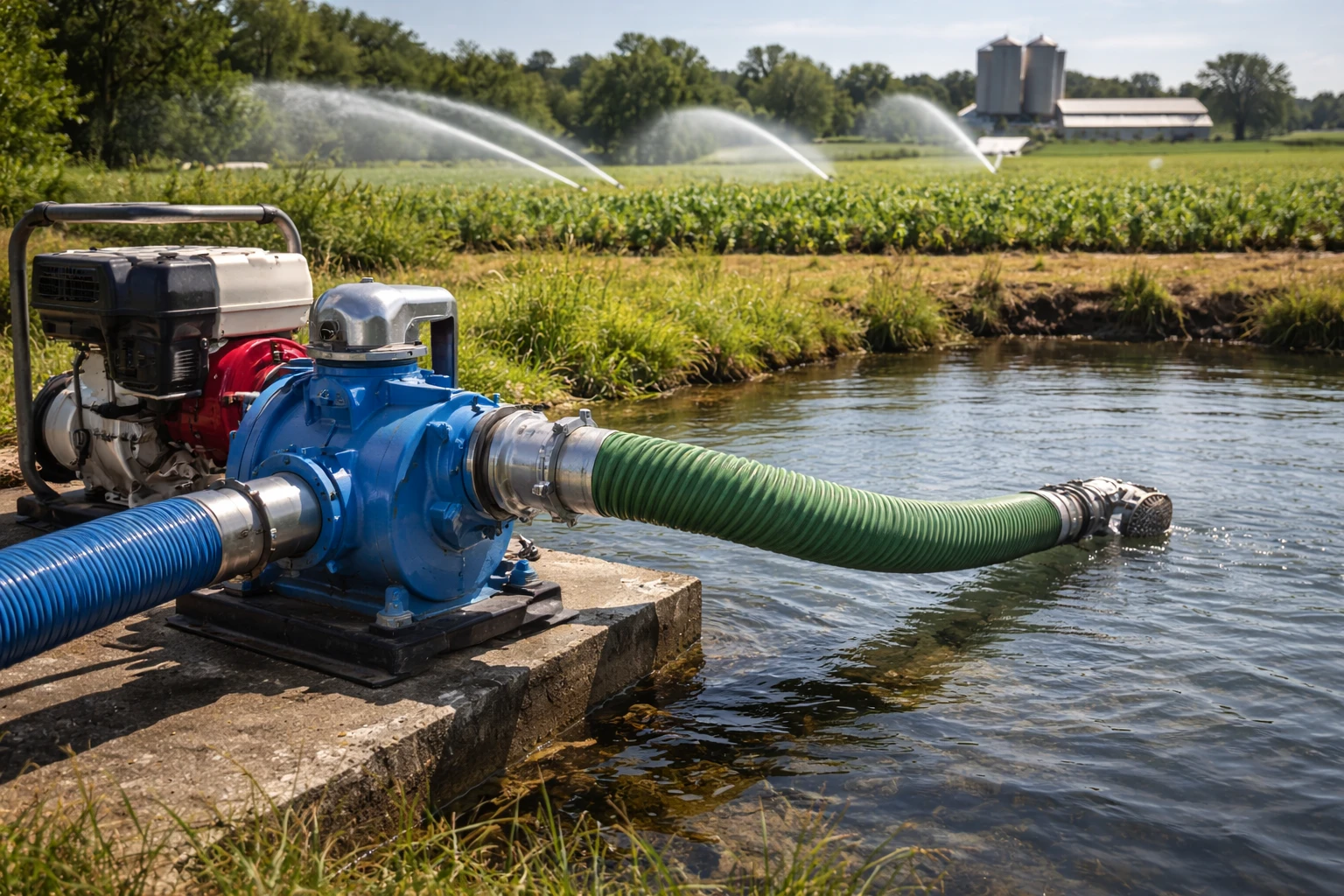
A suction pipe is designed to pull liquid, slurry, or other fluids into a pumping system. Unlike ordinary pipes, suction-side products must withstand negative pressure without collapsing. Scotto Pipes describes suction pipes as suitable for water transfer and fluid handling in various applications, with PVC suction hoses offering durability, strength, and resistance to heat and chemicals. Their product page also emphasizes smooth flow, high pressure resistance, and support for a wide variety of environments.
That matters because the suction side is where pump systems are often most sensitive. If there is too much restriction, a poor layout, or air entering the system, the pump may become noisy, inefficient, or unreliable. In practical terms, the performance of suction pipes affects how well the whole setup works, whether the use case is irrigation, dewatering, chemical transfer, or wastewater movement.
Why Do People Make Mistakes with Suction Pipes?
Most mistakes happen for simple reasons. Some users focus only on price and ignore quality. Others install the pipe in a hurry and add too many bends, poor joints, or the wrong diameter. In some cases, people assume any pvc suction pipe will work the same way for every application. That is rarely true.
The right selection depends on flow demand, fluid type, pump requirements, site conditions, and the layout of the suction pipe line. A pipe that works well for clear water in a farm field may not be the best option for abrasive slurry, solids-heavy drainage, or industrial chemical transfer. Scotto Pipes’ own suction-pipe overview shows how these products are used across agriculture, construction, industrial systems, chemical processing, marine settings, and sewage management, which already suggests that matching the pipe to the application is essential.
Are You Using the Wrong Pipe Size?
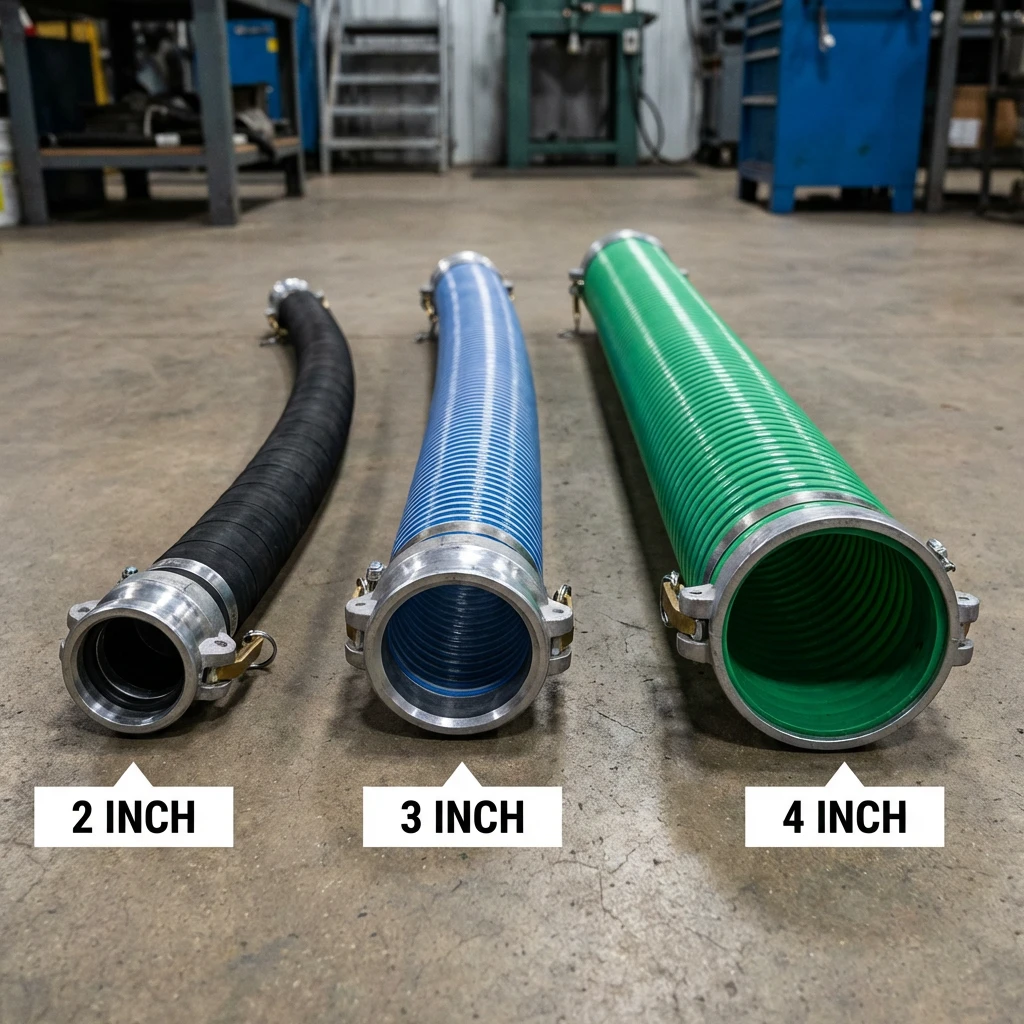
One of the most common mistakes is using the wrong diameter. Size directly affects flow rate, velocity, and friction losses. Technical guidance on suction pipeline design states that suction pipe velocities should generally be kept below 2 m/s, because higher velocities create more friction, noise, energy cost, and erosion, especially where suspended solids are present.
This is why choosing between a 2 inch suction pipe, 3 inch suction pipe, and 4 inch suction pipe should never be based on guesswork alone.
A 2 inch suction pipe may be suitable for smaller transfer jobs, compact agricultural systems, and moderate pumping needs. It is often chosen where space is limited and flow demand is not extremely high. However, using a 2 inch suction pipe in a high-demand system can create excess restriction and reduce pump efficiency.
A 3 inch suction pipe is often a more balanced option when more water needs to be moved without stepping up to a large, heavier pipe. In many mid-scale operations, a 3 inch suction pipe provides better flow support while still being manageable in handling and installation.
A 4 inch suction pipe is often selected for larger transfer volumes, faster movement of water, and applications where higher output is necessary. But a 4 inch suction pipe should still be matched to pump capacity and site conditions. Oversizing without purpose can increase cost and create handling inconvenience.
Why Is Choosing the Right Suction Pipe Size Important?
One of the most important factors in designing a pumping system is choosing the correct pipe size. The diameter of the pipe directly affects the amount of liquid that can flow through it.
Different applications require different pipe sizes, such as:
|
Pipe Size |
Common Applications |
Flow Capacity |
|
2 inch suction pipe |
Small pumps, gardens, small irrigation systems |
Low to medium |
|
3 inch suction pipe |
Medium agricultural irrigation and water transfer |
Medium |
|
4 inch suction pipe |
Large farms, industrial pumping systems |
High |
Using a pipe that is too small can restrict flow and force the pump to work harder. On the other hand, an excessively large pipe may increase installation costs without improving efficiency.
Selecting the correct pipe size ensures smooth water flow, reduces energy consumption, and improves the performance of the pumping system.
Does Pipe Material Quality Really Matter?
Yes, it does. Another common mistake is assuming that all pvc suction pipe products offer the same durability. Scotto Pipes notes that its suction pipes are made with refined quality PVC and other materials, using advanced manufacturing techniques to deliver durability, strength, smooth flow, and resistance to heat and chemicals. The company’s suction-pipe blog also identifies PVC suction pipes as lightweight, durable, corrosion-resistant, and widely used because they are easy to handle and affordable.
But material quality is not just about appearance. A poor-quality pvc suction pipe may flatten under suction, crack over time, perform poorly in changing temperatures, or fail when exposed to demanding field conditions. If the pipe is being used outdoors, in agriculture, or near chemicals, quality becomes even more important.
This is why buyers should not judge suction pipes only by initial price. Long-term performance, resistance to blockage, pressure handling, and service life matter much more than a small short-term saving.
Can a Poorly Designed Suction Pipe Line Reduce Pump Performance?
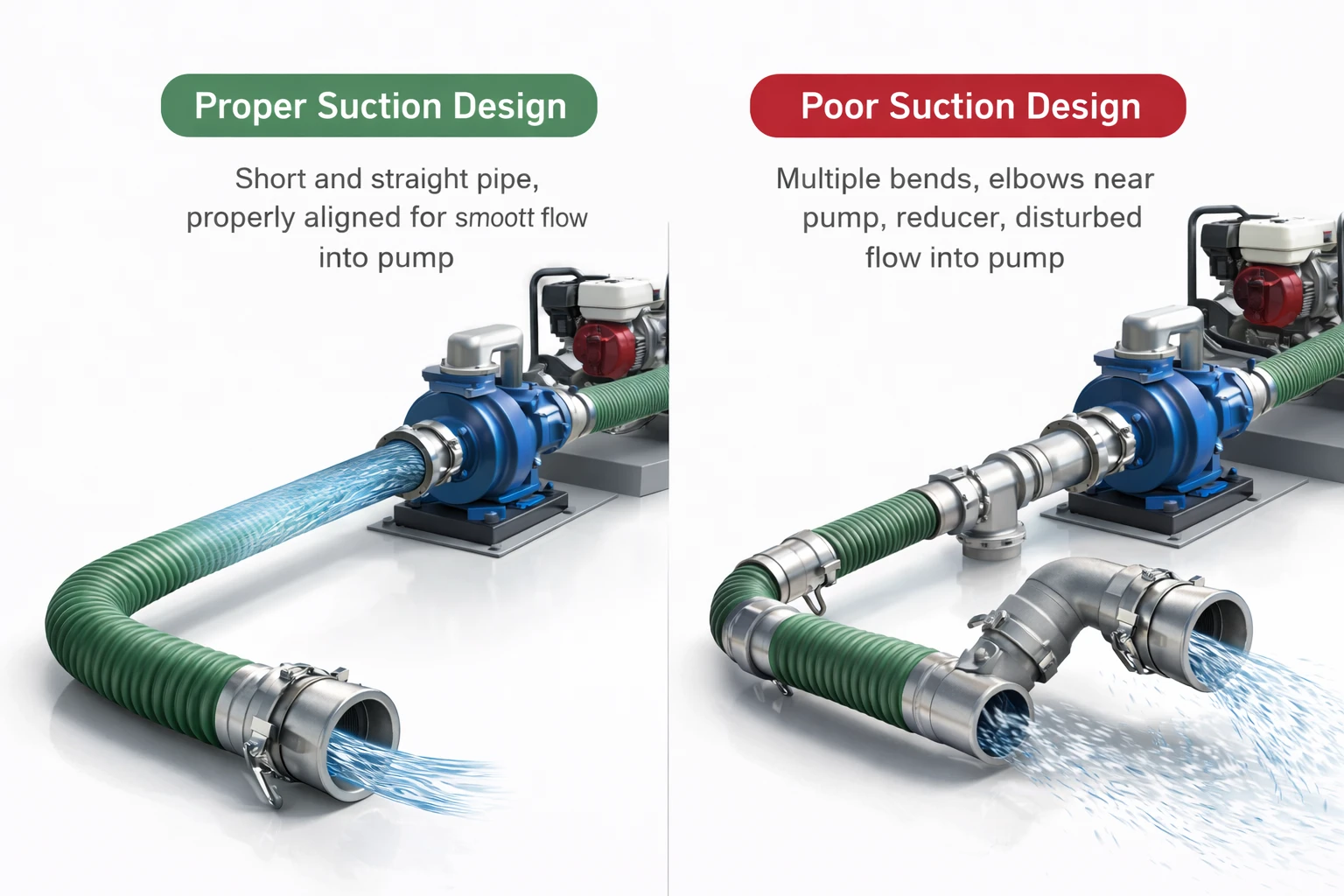
Absolutely. The layout of the suction pipe line is one of the biggest hidden causes of trouble. A badly routed line with too many elbows, reducers, or unnecessary fittings can interrupt smooth flow before the fluid even reaches the pump.
Technical design guidance says there should be at least five pipe diameters of straight piping connecting to the pump, and an elbow, reducer, valve, or strainer should not be placed within this final run. If an elbow is connected directly to the pump flange, fluid is not directed evenly into the impeller, which can stress bearings and seals and lead to premature failure.
In practical terms, that means your suction pipe line should be:
- As short as reasonably possible
- As straight as possible
- Free from unnecessary restrictions
- Properly aligned with the pump inlet
This mistake is common in farms, construction sites, and temporary installations where convenience takes priority over design. Unfortunately, shortcuts here often create bigger maintenance problems later.
What Happens If Air Enters the Suction Side?
Air entry is another major mistake. Even a high-quality set of suction pipes will struggle if air enters through poor joints, loose couplings, or bad intake positioning.
Technical guidance warns that entrained gases cause a loss in pump performance and increase noise, vibration, and wear. It also notes that the feed pipe should be fully submerged. If it is too close to the fluid surface, suction can form a vortex and draw air into the system.
This problem often appears in a suction pipe line when:
- Fittings are not sealed properly
- Joints are worn or loosely connected
- The intake sits too high in the water source
- The pipe is installed in a way that encourages vortex formation
The result is inconsistent flow, inefficient pumping, and faster wear on equipment. If a system sounds rough, vibrates more than usual, or shows erratic delivery, air entry should be checked early.
Is the Pipe Positioned Correctly in the Water Source?
Positioning matters more than many users realize. A suction intake that is too near the surface may pull in air. One that is too close to the bottom may pull in sludge, sand, or solids.
Guidance on suction pipeline design specifically states that if the feed pipe is too close to the surface, the suction can draw air into the liquid. It also says the pipe should not be too close to the bottom of the tank or pond, otherwise solids or sludge may be drawn up.
This means the intake location of suction pipes should always be checked based on the condition of the water source. In wells, ponds, storage tanks, and open reservoirs, the wrong intake depth can turn a good pumping setup into a constantly troubled one.
Can Dirt and Debris Damage Suction Pipes and Pumps?
Yes. Solids are another reason many systems underperform. If mud, sludge, plant material, or suspended particles enter the suction pipe line, the risk of erosion, clogging, or pump wear goes up.
The engineering guidance notes that fluids may contain suspended solids and that centrifugal pumps are less robust in such conditions, often requiring a filter or strainer. It also adds that the filter screen should have at least three times the free area of the pipe cross-section.
This matters especially where 2 inch suction pipe, 3 inch suction pipe, or 4 inch suction pipe sizes are being used in agricultural ponds, drainage pits, trenches, or wastewater movement. A larger pipe can still suffer if solids are not managed. The best approach is to inspect the source fluid, use suitable protection where needed, and clean the system regularly.
Are You Neglecting Maintenance?
Many users wait until a failure happens. That is a mistake. Routine maintenance extends life and protects performance.
Scotto Pipes’ suction-pipe blog recommends regular inspection for cracks, leaks, or blockages, as well as blockage removal to maintain smooth flow. That is practical advice, because maintenance issues often begin small and grow silently.
A good maintenance routine for suction pipes should include:
- Checking for wear, cracks, or flattening
- Inspecting all joints in the suction pipe line
- Looking for signs of leakage or air entry
- Clearing sediments and debris
- Confirming that the pipe still suits the operating condition
This is especially important for a pvc suction pipe used outdoors, in hot weather, around chemicals, or in rough site conditions. Even a durable product needs care if it is expected to perform consistently over time.
Can One Type of Suction Pipe Be Used for Every Job?
No. This assumption causes many avoidable failures. Scotto Pipes shows that suction pipes are used in agriculture, chemical processing, construction, industrial systems, marine applications, and sewage management. Their blog also discusses PVC, rubber, and steel suction pipes for different situations.
That makes the point clear: one solution does not fit all.
A pvc suction pipe may be excellent for water transfer, irrigation, and many general applications because it is lightweight, corrosion-resistant, and easy to handle. But tougher environments may require a different structure or material.
The same logic applies to size. A 2 inch suction pipe may be ideal in one setup, while a 3 inch suction pipe or 4 inch suction pipe is the better choice elsewhere. The right answer depends on the fluid, distance, pump type, transfer volume, and operating environment.
Why Scotto Pipes Fits This Conversation
When discussing mistakes to avoid, product reliability is part of the answer. Scotto Pipes presents itself as a manufacturer and supplier of suction pipes designed for efficient fluid movement, high resistance to pressure, blockage prevention, and broad application use. The company states that its suction pipes are available from 1/2 inch to 4 inch, which supports common needs across small and larger systems. Its blog also positions Scotto Pipes as a trusted supplier with experience in producing suction pipes for different industries.
That matters because avoiding mistakes is not only about installation habits. It is also about choosing a dependable source, selecting the right size, and using a pvc suction pipe or other suitable solution that matches the actual job. A strong product range supports better decisions at the planning stage, which reduces problems later in the field.
Best Practices to Follow While Using Suction Pipes
To get better performance from suction pipes, keep these practical rules in mind:
Choose the correct diameter. Do not guess between a 2 inch suction pipe, 3 inch suction pipe, and 4 inch suction pipe. Match the pipe to flow demand and pump requirements.
Use quality products. A reliable pvc suction pipe with good construction and appropriate resistance will usually perform better and last longer.
Keep the suction pipe line short and smooth. Avoid unnecessary elbows, sudden constrictions, and poor alignment near the pump.
Prevent air entry. Keep joints sealed, couplings tight, and the intake fully submerged without placing it too close to the surface.
Avoid solids where possible. If the source contains dirt or sludge, use the correct protection and inspect the pipe regularly.
Maintain the system. Small cracks, loose fittings, and minor blockages become major failures if ignored.
Use the pipe for the right application. Not every pipe is suitable for every fluid, environment, or operating load.
Conclusion
Most problems with suction pipes are not random. They usually come from avoidable mistakes such as choosing the wrong size, ignoring suction pipe line design, using a poor-quality pvc suction pipe, allowing air into the system, or neglecting maintenance. Whether you are selecting a 2 inch suction pipe for a smaller setup, a 3 inch suction pipe for a medium-duty operation, or a 4 inch suction pipe for higher transfer demand, the key is proper matching, proper installation, and regular inspection.
When the right pipe is chosen and the system is planned carefully, suction pipes can deliver stable flow, better pump efficiency, and longer service life. That is the real difference between a setup that constantly causes trouble and one that works reliably day after day.
Suction Pipe Usage FAQs
What is the most common mistake while using suction pipes?
The most common mistake is poor sizing or poor suction pipe line design. Both can reduce flow, increase friction, and make the pump work harder.
How do I choose between a 2 inch suction pipe, 3 inch suction pipe, and 4 inch suction pipe?
Choose based on the required flow rate, pump size, and site condition. A 2 inch suction pipe suits smaller jobs, a 3 inch suction pipe fits many medium applications, and a 4 inch suction pipe is often used for higher-volume transfer.
Is a pvc suction pipe good for water transfer?
Yes. A pvc suction pipe is widely used for water transfer because it is lightweight, durable, and resistant to corrosion in many common applications.
Why does my suction pipe line lose performance?
A suction pipe line may lose performance because of air entry, too many bends, solids intake, incorrect diameter, or poor alignment near the pump.
How often should suction pipes be checked?
Suction pipes should be checked regularly for cracks, leaks, loose joints, and blockages, especially in demanding agricultural, industrial, or drainage use